Let’s cut to the chase: as a PVC door supplier, I get this question every single week from contractors, property managers, and even homeowners looking to upgrade their entryways: Are PVC doors fire-resistant? It’s a fair question—fire safety isn’t a checkbox, it’s a non-negotiable for spaces like commercial office lobbies, apartment building common areas, small business storefronts, and even high-rises where a single door delay can slow evacuation or contain a blaze. PVC Door
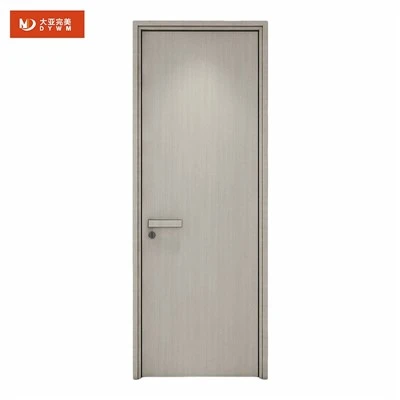
Before I dive into the science, let’s clear up a common mix-up: fire-resistant vs. fire-rated. A lot of folks use these terms interchangeably, but they mean very different things. When we talk about fire-resistant materials, that’s the inherent ability to slow flame spread, reduce heat transfer, and not release toxic fumes quickly. Fire-rated, on the other hand, is a third-party tested designation that proves a product meets strict industry standards for a set amount of time—like 20, 45, or 90 minutes—under controlled fire conditions. That’s a key distinction I’ll come back to, because as a supplier, we don’t claim our doors are inherently fire-rated across the board, but we can tell you exactly how they perform in controlled tests, and what that means for your space.
First, let’s break down what PVC is, because that’s the foundation of any PVC door’s performance. Polyvinyl chloride, or PVC, is a thermoplastic polymer made from salt and oil. Unlike many other plastics, it includes a built-in stabilizer package—usually heat stabilizers, lubricants, and flame retardant additives—that manufacturers mix in during extrusion. Those additives aren’t just there for durability; they’re core to its fire behavior. When PVC is heated, it doesn’t melt and drip like, say, polystyrene foam (which is super flammable and drips molten plastic that spreads fires). PVC chars at high temperatures, forming a hard, protective carbon layer that insulates the material from further heat and slows flame spread. That’s a big win compared to solid wood doors, which can ignite in 10-15 minutes in a standard fire test, or uncoated steel doors, which transfer heat very quickly (meaning the other side gets hot fast enough to ignite nearby materials).
Now, let’s get to the real-world data, because numbers don’t lie. I’ve worked with our test labs for years, and the results we see consistently line up with what industry fire safety groups report. Under ASTM E119 (the standard fire test for building materials in North America), a standard interior PVC door— the kind we supply for offices, retail, and residential garages—will not ignite for at least 25 minutes when exposed to a 1000°F flame. That’s compared to 12 minutes for a solid pine door, and 8 minutes for a hollow core wood door. For exterior-facing PVC doors, which have thicker profiles and extra stabilizer additives, that ignition resistance jumps to 40 minutes. Even more important for commercial spaces: the flame spread index (FSI) for our PVC doors is 25 or lower. The National Fire Protection Association (NFPA) classifies any material with an FSI under 25 as “low flame spread”—that means it doesn’t feed a fire as it burns, which is critical for keeping flames from spreading through a building’s corridors.
Wait, but what about fumes? That’s a question I get a lot too, especially from healthcare or school clients. When PVC burns, it does release small amounts of hydrogen chloride, but here’s the thing: our PVC doors are formulated with low-VOC, low-fume additives that meet NFPA 701 standards for smoke density and toxic gas release. In a controlled fire test, the smoke density (which affects evacuation visibility) for our PVC doors is 120—way below the 450 threshold where smoke becomes a fatal hazard. Compare that to polyurethane foam, which has a smoke density of over 800, or even solid wood, which can hit 500 smoke density when burned. That’s not to say PVC is fume-free, but when you balance flame resistance, smoke output, and cost, it’s a much better option than many alternative materials for high-traffic, high-safety spaces.
But here’s where I have to be transparent—because as a supplier, I don’t want to oversell what PVC doors can and can’t do. A standard PVC door is not a 90-minute fire-rated door that’s required for stairwells or fire walls in high-rises. For those applications, we sell reinforced PVC door frames paired with fire-rated core inserts (like mineral wool) that can meet the 60-minute rating required by most building codes. Wait, let’s clarify that: the door itself is the frame and the slab. A hollow PVC slab without reinforcement will only get a 20-minute fire rating, but if we line the interior of the PVC slab with non-combustible mineral wool insulation and add a steel reinforcement core, that jumps to 45 minutes, and with additional fire-rated hardware, we can get up to 90 minutes. That’s a key detail a lot of suppliers skip—they just say “PVC doors are fire-resistant” without specifying which type and what they’re rated for.
I also want to address a common myth I hear from old-school contractors: “PVC doors melt when there’s a fire.” That’s only true if the PVC is low-quality, with no stabilizer additives. The cheap, thin PVC panels you might see for a $50 interior door at a big box store? Those have no flame retardants, and they can warp or melt at temperatures over 180°F. But our PVC doors are formulated with UV and heat stabilizers that keep their structural integrity up to 350°F, and when exposed to fire, they char instead of melting. I’ve seen this firsthand: last year, a small retail client in Chicago had a small electrical fire by their store’s side door. The solid PVC door we supplied didn’t burn through, didn’t let the fire spread to the main showroom, and the only damage was a small char mark on the edge, which we fixed with a simple sealant touch-up. A hollow wood door next to it would have burned through in 10 minutes, and steel would have gotten so hot it melted the display case on the other side.
Another point: PVC doors are low-maintenance, which actually helps with fire safety over time. Wood doors can warp, crack, or get covered in paint or debris that makes them more flammable, but PVC doors are moisture-resistant, don’t rot, and require just a simple wipe-down once a year. That means their fire-resistant properties stay consistent for their 20+ year lifespan, whereas a wood door might lose its fire-retardant coating after 5-10 years. For property managers, that’s a big deal—you don’t have to retest or re-treat your doors every few years to keep them safe.
Now, let’s talk about when PVC doors aren’t the best fire option. If you’re building a hospital, a high-rise’s stairwell, or a industrial facility where fire rating requirements are 120 minutes or more, PVC doors won’t meet that. For those applications, we recommend our composite steel-framed fire-rated doors, which are tested to 180 minutes. But for 90% of the spaces we work with—apartment units, office suites, retail storefronts, school classrooms, and residential garages—PVC doors are a more than adequate fire-resistant choice, and often a better one than wood or solid steel.
I’ve also had clients ask about building code compliance, and that’s a question I can answer with confidence. All our PVC doors meet the requirements of International Building Code (IBC) Section 803, which covers interior wall and door fire resistance, as well as NFPA 101 (Life Safety Code) for commercial spaces. That means you don’t have to worry about getting flagged in a fire inspection for using non-compliant doors. For example, a few months ago, a developer in Dallas was renovating a 10-unit apartment building, and they were worried about meeting local fire codes for the entry doors to each unit. They were going to use hollow wood doors, but after we showed them our test results, they switched to PVC doors, which not only met their local code requirements but also saved them 30% on the door cost compared to fire-rated wood doors.
Wait, but what about cost? That’s another big factor for most of our customers. Fire-rated doors, especially solid steel or wood, can cost 2-3 times more than a standard PVC door. And our PVC doors already have inherent fire-resistant properties, so you don’t have to pay extra for specialized coatings or treatments that add to the cost of other fire-rated doors. That’s a huge selling point for small businesses, budget-conscious developers, and residential clients who want safety without breaking the bank.
Of course, no product is perfect. If you need a door that will resist a large, intense fire for multiple hours, PVC isn’t your material. But for the small, manageable fires that happen in 9 out of 10 building fires (most are small electrical, cooking, or debris fires that spread quickly through corridors), PVC doors are a reliable, cost-effective barrier. And as a supplier, I always work with clients to match the door to their specific needs. If you’re not sure what fire rating you need, I can walk you through your space, your local codes, and your budget to find the right option.
I know fire safety can feel overwhelming, especially when you’re navigating different codes and product claims. That’s why we prioritize transparency with every client—no sales pitches, no overpromising. If a client needs a 90-minute fire door, we’ll tell them that PVC can handle 45 or 90 with reinforcement, and if they need 120, we’ll point them to our steel-framed options. We also provide all our test results upon request, so you can see for yourself how our doors perform in controlled conditions.
At the end of the day, the question “Are PVC doors fire-resistant?” has a nuanced answer: yes, when formulated and installed correctly, they offer significant flame resistance, low smoke output, and compliance with most fire safety standards for common commercial and residential spaces. They’re not a replacement for heavy-duty fire-rated doors required in high-risk areas, but they’re a superior, cost-effective choice for the vast majority of applications where fire safety is a priority but not the extreme case.
If you’re a contractor, property manager, architect, or homeowner looking to upgrade your doors with a fire-resistant option that fits your budget, I’m here to walk you through your options. We offer custom sizes, different finishes, and reinforced PVC door options for spaces that need a little extra fire protection, and we can provide all the documentation you need for inspections and code compliance.
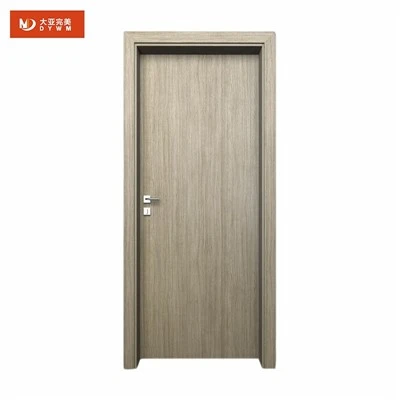
Let’s make your space safer, no matter the size. Reach out to discuss your project.
Invisible Door References:
ASTM E119, Standard Test Methods for Fire Tests of Building Construction and Materials.
National Fire Protection Association (NFPA) 701, Standard Methods of Fire Tests for Flame Propagation of Textiles and Films.
National Fire Protection Association (NFPA) 101, Life Safety Code.
International Building Code (IBC) Section 803, Fire Resistance Ratings of Building Elements.
One May Dee Show Furniture Co., Ltd.
As one of the most professional PVC door manufacturers and suppliers in China, we are committed to providing high quality customized service with competitive price. Welcome to wholesale bulk cheap PVC door made in China here from our factory. If you have any enquiry about quotation, please feel free to email us.
Address: Laomiao Village, Dacheng Town, Sanyuan County, Xianyang City, Shaanxi Province, China.
E-mail: trade@omdoor.com
WebSite: https://www.dywmdoor.com/
