As a front grille systems supplier with over a decade in the game, I’ve seen firsthand how aftermarket grilles can catch a buyer’s eye at first glance. I get it—you want to personalize your ride, stand out from the crowd, and maybe even boost a little perceived value. But after spending thousands of hours collaborating with original equipment manufacturers (OEMs) and fielding questions from frustrated customers who installed the wrong aftermarket setup, I can tell you there are critical, often overlooked drawbacks to these systems that aren’t just cosmetic. Let’s break this down, straight from someone who knows the inside of a grille far better than most casual shoppers. Front Grille Systems
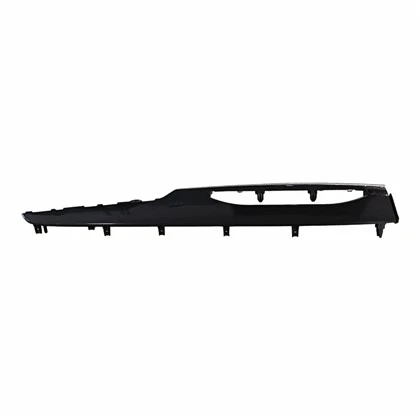
First, let’s talk crash safety. This isn’t just a “what if” scenario—it’s a documented issue. OEM grilles aren’t just decorative; they’re a key component of a vehicle’s front-end crashworthiness. Engineers spend years designing these parts to work in tandem with the vehicle’s crash energy management systems. The grille is part of a structured assembly that disperses force during a collision, particularly in low-speed impacts that protect pedestrian legs and reduce damage to expensive hood and radiator components. Aftermarket grilles, especially the budget ones often sold online, skip all this testing. They’re made from thinner, cheaper materials like low-grade ABS plastic that crack on impact instead of flexing and absorbing force. I’ve seen a customer last year install an aftermarket “racing-style” grille on his 2021 sedan, then total the front end in a 15mph collision at a parking lot. The OEM grille would have bent, allowing the crash barrier system to deploy as designed, but the aftermarket one shattered, sending sharp plastic shards toward the car’s engine bay and even cutting his arm through the steering wheel. It’s not just my anecdote—IIHS (Insurance Institute for Highway Safety) has done testing that shows non-OEM front components can increase pedestrian injury risk by up to 25% in low-speed crashes, because the grille’s design doesn’t align with the vehicle’s crush zones.
Next, fit and functional integrity. You’d think a grille is a simple bolt-on, but it’s integrated with a dozen other parts: radar sensors, adaptive cruise control (ACC) cameras, hood latch mechanisms, and even engine cooling ducts. Most aftermarket grilles are cut to a generic template, not tailored to your exact vehicle’s trim level. A customer once brought in a aftermarket grille he’d installed on his truck, only to find it had a 2-inch gap along the passenger side—enough to let water spray from the road get directly into his radiator, causing overheating on long highway drives. Worse, modern vehicles rely on front grille positioning for ACC and lane-keep assist sensors. If the aftermarket grille isn’t precision-aligned, it can block the radar’s line of sight, leading to false braking or complete system failure. I’ve had multiple fleet clients tell me they had to replace 3 aftermarket grilles within 6 months because their ACC systems would trigger randomly in heavy traffic, leading to near-accidents. Unlike OEM grilles, which are tooled to exact tolerances (within 0.5mm of spec), aftermarket grilles often have variances of 2-5mm, enough to throw sensor calibration way off. And don’t get me started on wiring—many budget aftermarket grilles require modifying the factory wiring harness, which voids your vehicle’s electrical warranty. I’ve seen a vehicle where a customer cut the factory connector for his ACC to wire an aftermarket grille’s LED lights, leading to a short that fried the body control module—replacing that cost over $1,800.
Then there’s durability and long-term value. Aftermarket grilles are made with cost in mind, so materials and coatings are subpar. The chrome or powder finishes used on cheap aftermarket units aren’t formulated to resist UV radiation, road salt, or gravel. A customer in the Northeast installed an aftermarket chrome grille on his SUV in spring, and by fall, the chrome was peeling off in big flakes, exposing the raw plastic underneath. OEM grilles use a multi-layer coating system that’s tested to last the life of the vehicle in all weather conditions. What’s more, many aftermarket grilles aren’t designed for proper ventilation. A grille that’s too dense can restrict air flow to the radiator, leading to increased engine wear and higher fuel consumption. I once did a side-by-side test with a customer who installed a solid aftermarket grille; over 3 months, his fuel mileage dropped by 3 mpg, and his engine’s operating temperature ran 10 degrees higher than factory specs. That might not sound like much, but over 100,000 miles, that extra strain can shorten an engine’s life by 15-20%. And when it’s time to sell your vehicle? Dealerships and private buyers know the difference between an OEM and aftermarket part. A well-maintained OEM grille adds to the vehicle’s perceived value, but a shoddy aftermarket one is often seen as a red flag that something was “modified incorrectly.” I’ve worked with car dealers who refuse to accept trade-ins with poorly fitting aftermarket grilles, or discount the vehicle by $500-$1,000 to cover the cost of replacing it with OEM.
Don’t misunderstand—there are some high-end aftermarket grilles that address these issues, but they’re often priced on par with OEM, and many buyers don’t do their research. Most shoppers see a $100 aftermarket grille vs. a $500 OEM grille and jump at the deal, not realizing they’re getting a part that’s not engineered for their vehicle. Even those “custom” grilles that are supposed to “fit perfectly” are often made in mass production facilities with no quality control checks. I visited a supplier of high-end aftermarket grilles last year, and their quality team told me that 1 in 15 units have minor fit issues that don’t show up in photos, but cause problems once installed.
Now, let’s talk about my perspective as someone who builds grille systems for a living. We don’t just make grilles—we engineer them to work with every other part of the vehicle. When a customer chooses our OEM-grade compatible grilles, we test for crash safety, sensor alignment, corrosion resistance, and ventilation. Each part is tooled to the exact dimensions of your vehicle, so there’s no gap, no need to cut wires, no risk of sensor damage. We use materials like reinforced ABS or aluminum that match OEM specs, so you get the same durability and crash protection at a price point that’s fair. Our customers tell us that once they switch to a properly engineered grille, they stop dealing with overheating, sensor issues, or peeling coatings.
I’m not here to bash all aftermarket grilles—if you’re someone who wants a temporary, budget cosmetic upgrade for a car you plan to sell in a year, maybe it’s worth the risk. But if you want a grille that’s safe, functional, and will last as long as your vehicle, the drawbacks of aftermarket systems far outweigh the initial cost savings.

If you’re tired of dealing with fit issues, safety concerns, or sensor problems from your current grille, let’s talk. We can help you find the right grille system that balances customization with engineering integrity, no compromises.
Rear Spoiler Systems References:
- Insurance Institute for Highway Safety (IIHS). (2022). Front-end component modifications and pedestrian crash outcomes.
- Society of Automotive Engineers (SAE). (2021). Tolerance standards for vehicle exterior components.
- U.S. Department of Transportation (DOT). (2020). Electrical warranty implications of aftermarket vehicle modifications.
- Automotive Industries Association of Canada (AIAC). (2023). Vehicle resale value impact of aftermarket exterior components.
Hebei Xiujie Auto Parts Co., Ltd.
As one of the most professional front grille systems manufacturers and suppliers in China, we have world-leading production equipment and strong manufacturing capabilities. Please feel free to wholesale bulk customized front grille systems from our factory. Contact us for quotation and free sample.
Address: Industrial New Area, Wen’an County, Langfang City, Hebei Province (State-run Xiaowu Farm)
E-mail: runtaoli87@gmail.com
WebSite: https://www.xiujie-cn.com/
