Hey everyone,
If you’re reading this, chances are you’re either a med device OEM struggling to source precision components that don’t hold up in ORs, or someone like me who’s spent years debugging why a tiny, $0.10 titanium spacer became a production bottleneck. For the last 8 years, I’ve run a precision medical components shop—we make stuff like insulin pump cannula hubs, neurostimulator lead contacts, and orthopedic implant locking screws. Let me tell you, QC here isn’t just a “check box”; it’s the difference between a device that works in a patient’s chest and a recall that shuts your production line down. I’ve seen both. Last year, a client’s 0.2mm deviation in a catheter port seal cost them $2.7M in recalls and a year of FDA delays. That’s not a typo. So let’s talk about how we nail QC for the tiny, make-or-break parts no one notices until they fail. Precision Medical Components
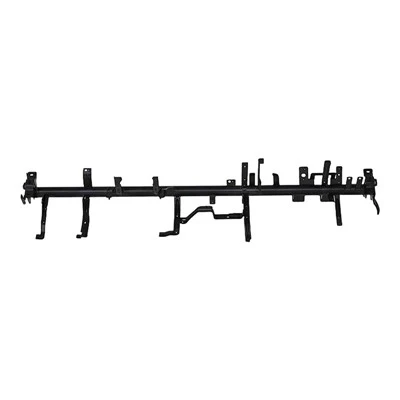
First, let’s get real: precision medical parts aren’t your average auto or aerospace bits. We’re working with tolerances that sometimes hit ±0.001mm—think 1/100th the width of a human hair. And every component touches a patient, often inside their body. So your QC can’t end at the shipping dock. It has to be baked into every step, from raw material receipt to final packaging. Here’s what works for us, no fluff, just stuff that’s actually prevented us from missing a single FDA audit mark since 2019.
Start with raw material triage—this is where 80% of QC fails before it even begins. A lot of suppliers grab stock materials and call it good, but for med parts, even a tiny impurity can ruin a part. Last month, we got a batch of 316L stainless steel (the gold standard for implants) from a new vendor. Their material cert said no inclusions over 0.5μm, but when we ran a quick ultrasound scan, there were 12μm iron oxide clusters. Those would’ve caused implant rejection in a patient’s hip. So we sent it back. But here’s the system we built: instead of just taking the vendor’s word for it, we have a dedicated QC tech on duty for every material delivery, and we run 10% of every new batch through non-destructive tests (NDT) before it even hits the machine floor. For polymers like PEEK, we test tensile strength and biocompatibility right away, not after molding. No exceptions. I’ve had sales guys beg me to “cut a corner” for a fast turnaround—“it’s just a spacer, no big deal”—but that’s how mistakes happen. Raw material QC is non-negotiable.
Next up: in-process checks that aren’t just “eyeball the part.” Old-school QC where you check 1 out of 100 parts works for a plastic toy, but not for a part that’s going into a pacemaker. We run 100% in-process dimensional checks for every critical feature, and we use CMMs (Coordinate Measuring Machines) and optical comparators that auto-log every measurement. Wait, but don’t just rely on machine data—our machinists do a “first part check” every time we set up a new run. Last quarter, a new temp machinist was setting up a CNC for a neuro lead contact and forgot to adjust the tool offset by 0.003mm. The machine would’ve cranked out 5,000 bad parts if the tech didn’t stop him mid-run and do a quick manual check. Now we also do “mid-run” checks for batches over 1,000 parts—we pull a part halfway through, run it through the CMM, and if there’s any drift, we adjust the tooling before more bad parts are made. It’s a little more time, but way cheaper than reworking a 10,000-part batch. Also, for parts with complex geometry, like a custom implant plate, we use CT scans to check for internal flaws you can’t see with a microscope. That’s not just fancy tech—it’s how we caught a hidden void in a titanium acetabular cup last year that would’ve caused it to crack in a patient.
Then there’s traceability—this is the stuff the FDA obsesses over, and it’s non-negotiable for med components. If a part fails, you need to track every step of its journey: which material batch it was made from, which machine ran it, which QC tech checked it, even the exact time it was produced. We use a cloud-based system (not just a spreadsheet) that tags every part with a unique serial number, and you can pull up its entire history in 2 clicks. A few years back, a client had a small number of their insulin pumps failing due to a faulty hub we made. We pulled the serial numbers of the bad pumps, looked up our logs, and found those hubs came from a single machine that had a worn tool. We fixed the tool, notified the client within 24 hours, and only recalled the 300 bad parts, not 10,000. That’s traceability working. If we’d just had a paper trail, we would’ve wasted weeks sifting through files and maybe missed the batch. And don’t skip this step—no matter how small the part. Even a $0.50 valve in a inhaler can lead to a massive recall if you can’t trace it.
Now, the “soft” QC stuff: training your team and building a culture where QC is everyone’s job, not just the QC department. I see so many shops where machinists see QC as a roadblock, or QC sees machinists as “cutting corners.” That’s a recipe for disaster. Our machinists do 40 hours of med-specific training every year, including a deep dive into FDA requirements and biocompatibility. And our QC techs don’t just sit in a room checking parts—they shadow machinists on the floor, so they understand what’s actually happening with the parts, not just what a print says. Last year, a QC tech noticed a tiny burr on a catheter port that the print said was acceptable, but when she tested it, it caught on the insertion needle. She flagged it, and we adjusted the print to require burr-free edges—something no one had caught because old QC just followed the print. Also, we have a “no blame” policy for QC issues. If a machine drifts and makes bad parts, we fix the machine, not yell at the machinist. That way, people come to us with small problems before they become big ones. We even have a $500 quarterly “QC idea” bonus—last quarter, a machinist suggested adding a light on the CNC that alerts when a tool is worn, saving us 10 hours of downtime a week. The team isn’t just following rules—they’re invested.
Wait, what about calibration? If your CMM is off, all your measurements are garbage. That’s a mistake we almost made in 2018. We were having a great quarter, then a batch of implant screws failed a dimensional check. Turns out our CMM hadn’t been calibrated in 6 months—someone forgot to schedule it. We had to recall 2,000 parts, which cost us $120k in rework and client fines. Now we have a calibration schedule that’s automated—our software sends a reminder 2 weeks before every calibration, and we hire a third-party company to do it, not just an in-house tech. We also calibrate every tool (drills, mills, cutters) every 2 weeks, not just once a quarter. For med parts, precision is only as good as your tools.
And final packaging QC—don’t skip this. A part might be perfect when it leaves the machine, but if it gets scratched in packaging, it’s useless. We use ESD (electrostatic discharge) bags for electronic components, sterile packaging for implant parts, and every package has a QC seal that, if broken, alerts the client that the part might be damaged. We also do a final visual check under a 10x microscope for every part, and for critical parts, a 20x. Last year, a batch of pacemaker lead contacts had a tiny scratch that only showed up under 20x—we caught it before shipping, so the client didn’t have to stop their line. Packaging isn’t just a box—it’s part of the QC process.
I know this sounds like a lot, but for us, it’s how we’ve grown from a 3-person shop to a go-to precision medical components supplier for 12 med device OEMs across North America. The worst part is, I’ve had OEMs say, “We can get a cheaper part overseas.” Yeah, you can—but how do you verify their QC? When a part fails in a patient, no one cares that it was cheap. They care that you got it right.

If you’re an OEM dealing with precision medical components, or you’re looking for a partner that gets QC right, we’re here. We don’t do “good enough”—we do parts that work, every time. Hit us up to chat through your specific needs, no sales pitch, just real talk about how we can help you avoid recalls and keep your patients safe.
Car Seat Parts References:
- U.S. Food and Drug Administration. (2022). Quality Systems Regulation (21 CFR Part 820) – Subpart I: Quality Control.
- International Organization for Standardization. (2021). ISO 13485: Medical Devices – Quality Management Systems.
- American Society for Testing and Materials. (2020). Standard Guide for Non-Destructive Testing of Implant Materials (F2063-20).
- Precision Machined Products Association. (2021). Best Practices for Quality Control in Medical Component Manufacturing.
- Med Device Online. (2022). Common Causes of Medical Component Recalls and How to Prevent Them.
Suzhou Yehe Precision Stamping Co., Ltd.
With abundant experience, we are one of the most reliable precision medical components manufacturers and suppliers in China. We warmly welcome you to buy customized precision medical components at competitive price from our factory. If you have any enquiry about quotation, please feel free to email us.
Address: No.5, Beifang Road, Changshu City, Suzhou, Jiangsu Province, China.
E-mail: szyh06@yehejingmi.com
WebSite: https://www.yehe-precision.com/
