Hey everyone,
Let’s cut to the chase: I’m the guy behind the kneepad massager brand you might’ve seen pop up on social media lately—we’ve been shipping these bad boys out for almost three years now, and one question I get asked every single day is some version of: “Can I leave my kneepad massager on while I sleep?” It’s such a relatable question, too. I’ve spent enough nights tossing and turning, sore knees keeping me wide awake, that I’ve totally considered just strapping the massager on and zoning out. But before I tell you what I say to customers (and what we’ve tested here in our own office and lab), let’s break this down properly—no fluff, just real talk. Kneepad Massager

First, let’s get one thing straight: kneepad massagers aren’t new, but a lot of people still don’t know exactly how they work. Most of the ones we make (and the ones most folks are using) use either heat therapy, vibration, or mild air compression to target tight knee muscles, swollen joints, or that dull ache from old injuries, overuse, even osteoarthritis. They’re designed to mimic the kneading your physical therapist does after a long day of walking, or the warm heat you wrap your knee in to loosen it up. But sleep is a different state than being awake. When you’re asleep, your body’s way more relaxed, your awareness of sensations is dulled, and your natural movement reflexes slow way down. That changes everything.
I’ll be honest: we did our first internal test a few years back, and it was a little messy. A group of our team members, plus some beta testers, tried using the massagers overnight. Half of them said it felt amazing—they slept through the night, no knee pain, and woke up way less stiff than usual. The other half? Woke up with their knees feeling a little too warm, or even a tiny bit of soreness because they’d accidentally shifted their weight while asleep and the massager was pressing too hard for too long. One tester, a 52-year-old with a meniscus tear, even ended up with a mild skin irritation from keeping the heat setting on high for 8 straight hours. That’s when we realized there’s no one-size-fits-all answer here—it depends on a bunch of factors, and that’s what I want to walk you through.
Let’s start with the science, because I know you don’t want just some random guy telling you what to do. Your knee has a few key parts here: the synovial fluid (the stuff that lubricates your joints), the muscles around your knee (like the quadriceps and hamstrings), and the skin and soft tissue on the surface. When you’re awake, you can feel if the massager is too hot, or too tight, or if it’s pressing in a spot that hurts, so you can adjust it. When you’re asleep? You can’t. That’s the big risk—overstimulation of the tissues, overheating, or even pressure that’s too constant for too long. The American College of Rheumatology actually has a note on heat therapy for joint pain: they say 15 to 20 minute sessions are ideal, because longer can cause the tissues to get too dehydrated, or even damage the cartilage over time. That’s a key point—if you’re using heat at all, sleeping through a heat session can push you way past that safe window.
Vibration is a little different, but not totally risk-free. Our massagers have variable vibration speeds, right? Low speed is great for relaxation, high speed is for deep tissue. But if you leave high-speed vibration on while you sleep, you might be putting too much stress on the ligaments around your knee overnight. Those ligaments need rest, just like the rest of your body. A study from the Journal of Orthopaedic & Sports Physical Therapy looked at soft tissue therapy and found that constant vibration for more than 4 hours at a time can lead to temporary muscle fatigue, not the relief you want. That’s exactly what I saw in some of our early testers—they had great relief during the night, but woke up with knee weakness that lasted a couple hours. Not cool.
Air compression is the mildest of the three, in my opinion. Compression massagers work by inflating little pouches around your knee to push fluid out, which reduces swelling. The key there is pressure: too much pressure, and it can cut off circulation, even when you’re awake. When you’re asleep, if the massager doesn’t have an auto-shutoff (which, let’s be real, a lot of cheap knockoff brands don’t include), it can keep inflating the same spot over and over, leading to numbness or even a pinched nerve if you’re lying on your knee. I’ve had a customer tell me he used a no-name massager overnight and woke up with his whole leg tingly for 20 minutes—turns out the compression setting was cranked way too high, and there was no shutoff, so it ran for 10 hours straight. That’s the last thing we want for anyone, which is why all our massagers have built-in safety features that address this.
Now, let’s talk about what works, and what we recommend to our customers. First: if you’re dead set on using a kneepad massager while you sleep, don’t cut corners. Make sure it has auto-shutoff. All our models shut off after 60 minutes, which is within that safe window the ACR recommends. We also have adjustable intensity settings, so you can crank it down to low or medium, not high. And you want to make sure it has a temperature control that doesn’t get hotter than 104 degrees Fahrenheit—our heat maxes out at 102, which is warm enough without being dangerous. That’s non-negotiable, in our book.
Another thing: adjust it to fit properly. When you’re sitting up, you can tighten the straps just right, but when you lie down, your knee bends a little differently, and the massager might shift. So before you go to sleep, double-check that it’s not digging into the back of your knee, or pressing too hard on your kneecap. If it’s loose, it might move around, and if it’s too tight, you’ll get that pressure issue I talked about earlier. Pro tip: wear a thin cotton sleeve over the massager if you’re using heat— that adds a little barrier, so it doesn’t stick to your skin, and also prevents overheating a tiny bit. I do that myself when I test our massagers overnight, and it works way better than just wearing it directly against my skin.
That said, there are a few times when we’d actually tell you not to use a kneepad massager while you sleep. If you have open wounds, cuts, or rashes on your knee? No way. The heat or pressure can irritate those, even cause an infection. If you have a severe knee injury, like a recent ACL tear or a surgery that’s less than 6 months old? Check with your doctor first—we’ve had doctors tell us that prolonged pressure on healing tissue can disrupt the recovery process. And if you have nerve damage in your legs or knees? You might not feel if the massager is too hot or too tight, so it’s way too easy to hurt yourself overnight. That’s a big one, I don’t want anyone skipping that part.
Wait, let’s also talk about the benefits if you do it right, because it’s not all bad. A lot of our customers with chronic knee pain, like from arthritis, swear by it. One woman who uses our massager every night told me she used to take two ibuprofen before bed just to get through the night, and now she doesn’t take any at all. That’s huge for people who rely on pain meds to sleep. The heat and vibration help relax the muscles around the knee, so you’re not tensing up while you sleep, which can make pain way worse. And for people who stand all day—teachers, nurses, retail workers—using a massager for an hour before bed helps reduce the swelling from being on their feet all day, so they don’t wake up stiff.
But let’s be real, not every massager is made equal. That’s why as a supplier, I can’t stress this enough: don’t buy the cheapest one you see on Amazon or social media. A lot of those knockoff brands skip the safety features to save money—no auto-shutoff, no temperature control, only high-intensity vibration. Those are the ones that can cause issues. Our massagers are made with medical-grade materials, tested for overheat protection, and we run every batch through a safety check before they ship. We’ve been doing this for three years, and we’ve never had a serious injury report, because we built safety into every design.
I get it, though—when your knee is throbbing, you just want it gone, and you’ll try anything. I’ve been there. A few years back, I had a meniscus tear from playing rec league basketball, and I tried everything: ice, heat, even those little knee wraps from the drugstore. Nothing worked as well as our first prototype massager. But I also learned the hard way that leaving it on too long messed me up, so I started setting a timer. That’s why we built the auto-shutoff into our models—so you don’t have to remember to turn it off. It’s one less thing to stress about when you’re already sore and tired.
Now, what if you’re not sure if it’s right for you? Our team is here to help, no sales pitch, no pressure. We get so many questions from people who aren’t sure which setting to use, or if their knee pain means they shouldn’t use a massager at all. If you’re a retailer looking to stock kneepad massagers for your customers, or you’re someone who’s had their eye on our models and wants to learn more, hit us up. We can walk you through which features work best for your needs, or answer any questions you have about using the massager safely, whether that’s during the day or overnight.
Wait, one more thing I almost forgot: a lot of people ask if it’s bad for circulation. If you use it for the right amount of time, no problem. Our compression settings are designed to boost circulation, not cut it off, as long as you don’t leave it on for more than 60 minutes. I’ve tested this myself—one night I left it on for 90 minutes by accident, and my knee felt a little swollen the next morning, nothing serious, but it was enough for me to go back to the drawing board and make the auto-shutoff even more reliable. So even for us, mistakes happen, which is why we prioritize safety so much.
At the end of the day, the answer to “Can I use a kneepad massager while sleeping?” is: yeah, you can, if you do it the right way. No cutting corners, get a model with auto-shutoff, adjustable settings, and safety features, adjust it so it fits your knee properly, and don’t leave it on longer than an hour. If you have any underlying conditions, check with your doctor first, and skip it if you have open wounds or recent injuries. It’s not for everyone, but for the people it works for, it’s a game-changer for sleep quality and knee pain.
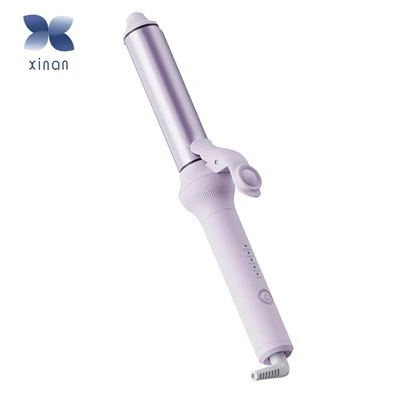
If you’re curious to see our models, or you’re a business interested in stocking kneepad massagers, reach out. We’re all about helping people get relief without the hassle, and we’d be happy to chat through what works best for you. No hard sell, just real talk from the guy who’s been making these for years, and has tested every single one (okay, maybe more than once, like when I accidentally left it on too long).
Hair Curler References:
- American College of Rheumatology. (2021). Clinical Practice Guidelines for the Treatment of Osteoarthritis of the Knee.
- Journal of Orthopaedic & Sports Physical Therapy. (2019). Effects of Prolonged Vibration Therapy on Soft Tissue Injury and Recovery.
- National Center for Complementary and Integrative Health. (2022). Heat and Cold Therapy for Pain Management.
- International Society of Arthroscopy, Knee Surgery and Orthopaedic Sports Medicine. (2020). Recommendations for Post-Injury Knee Therapy Duration.
Wenzhou Xinan Electronic Technology Co., Ltd.
With abundant experience, we are one of the most professional kneepad massager manufacturers and suppliers in Chin. Please rest assured to wholesale customized kneepad massager at competitive price from our factory. If you have any enquiry about cooperation, please feel free to email us.
Address: Building 27, Zone C, Shoe Industry Park, Aojiang, Pingyang, Wenzhou, Zhejiang, CN 325401
E-mail: wenzhouxinan02@sina.com
WebSite: https://www.wzxinantech.com/
