Hey there, I’m Jake, and if you’ve ever worked with plastic parts—whether it’s a medical device component, a toy, a automotive interior trim, or even a simple kitchen utensil—you’ve definitely interacted with something that came off an injection molding line. For the last 12 years, I’ve run this injection mold supply business, and one question I get asked more than any other is this: “What’s the life expectancy of an injection mold?” It sounds like a straightforward question, but trust me, the answer isn’t a single number you can pull off a spec sheet. If you’re a product designer, manufacturing engineer, or someone tasked with budgeting for tooling, knowing this isn’t just a technical detail—it’s the difference between hitting your production targets, staying on budget, and ending up with a mold that dies halfway through your run, leaving you scrambling to fix delays or retool. Let me break this down like I do for my regular clients, no stuffy jargon, just real-world experience from hundreds of molds I’ve built and serviced. Injection Mold
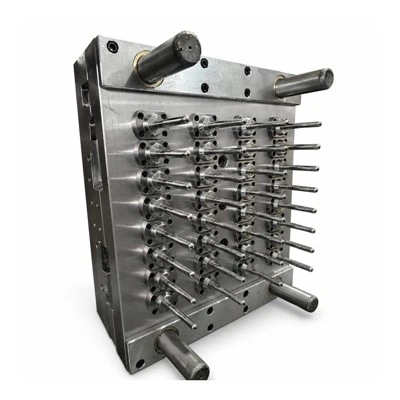
First, let’s define what we actually mean by “mold life expectancy.” A lot of folks new to injection molding think it’s just how many parts a mold can make before it’s useless. But that’s not quite right. A mold doesn’t just stop working after X parts. The life we talk about falls into two categories: functional life and end-of-life. Functional life is the sweet spot: how many high-quality, defect-free parts you can get before the mold starts producing parts that are out of spec—think flash on edges, short shots, warpage that’s off tolerance, or dimensional variation. End-of-life is when the mold is so worn or damaged that it’s no longer feasible to repair it, and you need to build a new one. Some molds can be refurbished multiple times, which blurs the line, but we’ll get to that later.
Now, the biggest variable here is the mold material. This is make-or-break for how long a mold lasts, and it’s not just about “steel vs. aluminum”—it’s the grade of steel, how it’s treated, and even the size and complexity of the mold. Let’s start with aluminum molds, which are super popular for low-volume runs, prototyping, or short production jobs, like if you’re launching a new medical device and only need 10,000 parts before you iterate. Aluminum is cheaper and machines faster, so it’s the go-to for small-batch work. A standard 6061 aluminum mold might get you anywhere from 10,000 to 100,000 parts, but wait—don’t quote that as a hard number. If you’re running a high-fill material like glass-filled nylon or polycarbonate, which are abrasive, that 6061 mold might only hit 10,000 to 30,000 parts before the cavity walls start eroding. If you’re using a high-grade aluminum, like 7075 or even mold-grade aluminum (like AlMgSc, which is heat-treated for hardness), you can push that to 100,000 to 200,000 parts, even with slightly abrasive materials. That’s why I always tell clients: if you’re sure your production will top out at 50,000 parts total, aluminum is fine. If you think you might scale, go for that high-grade aluminum or move to steel from the start.
Steel is where the real variation happens, and it’s what we use for 80% of our high-volume production molds. Let’s break steel grades by their typical use and life. P20 is the workhorse for mid-volume runs. It’s a pre-hardened tool steel, easy to machine, and relatively affordable. A well-built P20 mold, run with non-abrasive materials like standard polypropylene, polyethylene, or ABS, will give you 200,000 to 500,000 parts. Push that to glass-filled PP or nylon, and you’re looking at 150,000 to 300,000 parts. Then there’s H13, a hot-work tool steel that’s heat-treated to a much higher hardness than P20—around 50-55 HRC, vs. P20’s 28-32 HRC. H13 is great for materials that are more corrosive or abrasive, like glass-filled nylon 30% or engineering resins with additives. A properly built H13 mold can hit 500,000 to 1 million parts, even with those tough materials. Now, if you’re running 2 million parts or more, you need the big guns: S7 or stainless steels like 420 SS or 17-4 PH. S7 is shock-resistant, holds up great to high temperatures and abrasive materials, while stainless steels resist corrosion from things like PVC or other materials that release acidic gases when melted. A mold made from S7 or 420 SS can easily get 1 million to 3 million parts, and I’ve had a few clients running automotive trim parts on S7 molds that hit 4 million parts without major issues. There’s even high-speed steel (HSS) or powdered metal steels (like Vanadis 8) for ultra-high-volume runs, like if you’re making disposable plastic syringes or bottle caps that need 100 million parts. Those can top 10 million parts, but they’re way more expensive, so we only recommend them when a client is 100% sure they’ll run that volume.
Wait, but mold material isn’t the only factor. The design and build quality matter just as much, maybe more. I’ve seen a $5,000 aluminum mold built to tight tolerances by a reputable supplier last longer than a $7,000 steel mold slapped together with cheap machining and no surface treatment. Let’s talk about the little details we add to every mold that extend life. First, surface treatment. If you run abrasive materials, polishing the cavity surfaces and adding a nitriding or chrome plating coating can double or even triple the lifespan. Nitriding hardens the outer layer of the steel, so it resists wear from resin particles grinding against the walls. Chrome plating does the same, plus it reduces friction, so parts eject easier and there’s less stress on the mold. Then there’s the design: how the core and cavity are aligned, the cooling lines—wait, cooling lines might not seem like they affect life, but a mold that overheats every cycle experiences thermal expansion and contraction that causes micro-cracking and fatigue over time. A mold with properly routed cooling lines will run at consistent temperatures, so it doesn’t get stressed, leading to way less wear. Also, the number of cavities, the gate design, and even the ejector pins. Molds with more cavities put more stress on each component, so if you’re running a 16-cavity mold vs. a 2-cavity mold, the life per cavity might be a bit lower, even if the material is the same. I always adjust my quotes for that, because a 16-cavity H13 mold will have a slightly lower total life than a 2-cavity one, all else equal.
Then there’s the resin you’re running, which we touched on earlier, but it’s worth emphasizing because it’s a huge variable. Resins that are standard, like PP, PE, ABS—those are gentle on molds, right? They melt at moderate temperatures, don’t have a lot of abrasive fillers, don’t release corrosive gases. So a mold running PP will last way longer than the same mold running glass-filled nylon 40% or PVC. PVC is a big one—it releases hydrochloric acid when melted, which eats away at steel over time, even high-grade steel. If you’re running PVC, you need a stainless steel mold, and even then, you have to polish it and treat it properly. Polycarbonate is another one— it’s higher temperature, so it causes more thermal stress on the mold, and if it has glass fillers, it’s extra abrasive. I had a client a few years ago who tried to run 30% glass-filled PC on an old P20 mold they had lying around, and they burned through it in 120,000 parts, which is way less than the 300,000 they should have gotten. They switched to an H13 mold with nitrided cavities, and they’re now at 650,000 parts and still going strong. That’s the kind of mistake I help clients avoid all the time.
Then there’s operational factors—how the mold is used and maintained once it’s at your facility, that’s probably the biggest variable of all. I’ve seen a $20,000 steel mold last 1.2 million parts because the operator took care of it, cleaned it after every run, lubricated the ejector pins, checked the alignment regularly, and stored it properly when not in use. And I’ve seen a $15,000 aluminum mold die at 15,000 parts because the operator ran it with glass-filled resin, didn’t clean the flash off the gates, and left it sitting in a humid warehouse rusting. Maintenance is non-negotiable. When a mold is done running a job, you have to strip it down, clean all the resin residue off every part, dry it, apply a light anti-corrosion oil, and store it in a climate-controlled space. If you leave resin caked in the cavities, it will harden and cause damage the next time you run the mold. Ejector pins that aren’t lubricated will wear down quickly, leading to bent pins or parts that get stuck, which can crack the core or cavity if you force them out. Also, running the mold at the wrong parameters—too high temperature, too high injection pressure—will put extra stress on the mold, causing fatigue cracks, warping of the plates, and faster wear. I tell every client I work with to provide their operators with a detailed run sheet, and if they don’t have a good operator, we offer training on mold care, because it’s better for both of us: if your mold lasts longer, we get repeat business from you.
Now, let’s talk about when a mold reaches the end of its functional life. It’s not like a lightbulb that just stops working. The first signs are usually small: slight dimensional variation in parts, tiny blemishes on the surface of the part from worn cavity edges, flash that starts appearing where it never did before. You can often fix these with minor repairs: polishing the cavity, replacing worn ejector pins, adjusting the alignment of the mold halves. That’s refurbishment, and it’s way cheaper than building a new mold. A standard refurb for a mold that’s hitting the end of its life will usually get you another 20-50% of the original expected part count. Some molds can be refurbished multiple times. For example, a P20 mold that hit 300,000 parts can be refurbished to get another 200,000, then maybe again to get another 150,000, before it’s time to retire it. That’s why I always recommend building a mold that can be refurbished—designing it so individual components (cores, cavities, ejector pins) are easy to replace, not integrated so you have to rework the whole mold. The worst mistake a client can make is buying a cheap mold where the cavity is part of the mold plate, so when the cavity wears, you have to replace the entire plate, which is almost as expensive as a new mold.
Let me share a real example from last year to make this concrete. We built a 8-cavity H13 mold for a automotive interior parts client, they were running 25% glass-filled PP for door panel trim. At the time, they thought they’d need 500,000 parts total, so we quoted them an H13 mold, which we told them should give them 400,000-600,000 parts. Three years later, they called us and said they needed another 300,000 parts, but their mold was already at 420,000 parts, with slight dimensional variation on the trim. We didn’t have to build a new mold—we sent our team out to their plant, stripped the mold down, polished the cavity surfaces, replaced two worn ejector pins, and adjusted the mold alignment. We charged them a quarter of the cost of a new mold, and they got another 500,000 parts out of it, plus they added a second shift and ended up going to 1.2 million parts total with that same mold. That’s the value of working with a supplier that understands mold life, not just building a cheap tool that falls apart.
So putting this all together, what’s a realistic, evidence-based range for injection mold life expectancy? Let’s outline it clearly, so you don’t have to guess:
- Low-volume, prototyping, or short runs (under 50,000 parts): 6061 aluminum mold: 10,000–100,000 parts; high-grade aluminum (7075 or mold-grade): 100,000–200,000 parts
- Mid-volume runs (50,000–500,000 parts): P20 steel mold (gentle resins: PP, ABS): 200,000–500,000 parts; H13 steel mold (abrasive or higher-temperature resins): 300,000–1,000,000 parts
- High-volume runs (500,000–5,000,000 parts): S7 or stainless steel mold: 1,000,000–3,000,000 parts
- Ultra-high-volume runs (5,000,000+ parts): Powdered metal steel or high-speed steel mold: 5,000,000–15,000,000+ parts
But remember, these are ballpark numbers. If you’re using PVC, glass-filled resins, running a cheap mold with no surface treatment, or have bad maintenance, you’ll be at the lower end, maybe even below. If you’re using high-grade materials, running a properly built mold, with good maintenance, you’ll hit the upper end, even exceed it.
Now, what if you’re planning a project? How do you make sure you get the most out of your mold? First, be transparent with your supplier about your projected volume. Don’t say “I might need 100,000 parts” if you’re pretty sure you’ll need 500,000. Underestimating volume will lead to a mold that wears out way earlier than you need. Second, ask about material and surface treatments. If you’re running glass-filled resins, don’t settle for an un-nitrided P20 mold—pay a little extra for the right steel and coating, it will save you thousands in retooling later. Third, get a clear maintenance and care guide from your supplier, and train your team on it. We provide every client with a 2-page checklist for mold care, and we offer on-site training for large accounts, because we want your mold to last as long as possible. And fourth, ask about refurbishment options. A good mold should be designed to be serviced, not thrown away when it starts showing wear.
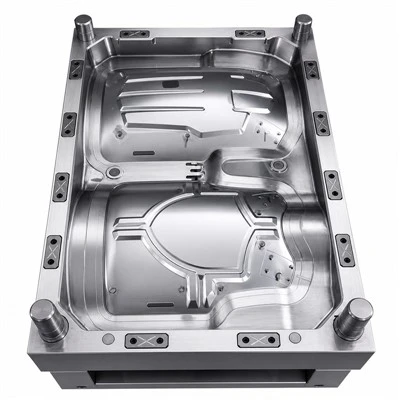
At the end of the day, injection mold life expectancy isn’t a number—it’s a balance between material science, engineering, operational care, and forward planning. I’ve seen startups go out of business because they cut corners on mold material to save money, only to have to retool mid-launch, delaying their product by months and blowing their budget. I’ve also seen large automotive companies lock in long-term partnerships with us because we build molds that last for millions of parts, so they don’t have to worry about supply chain delays or quality issues. If you’re in the market for a new mold, or you’re looking to troubleshoot a mold that’s not performing as expected, don’t guess at the life of your tool. Reach out to talk through your project, your volume, and your resin, and we can build a mold that meets your exact needs, with a clear understanding of how long it will last, and how to make it last even longer.
Injection Household Mold References:
- Rosato, D. V., Rosato, M. G., & Rosato, D. V. (2000). Injection Molding Handbook. Kluwer Academic Publishers.
- Todd, R. H., Allen, D. K., & Alting, L. (1994). Manufacturing Processes Reference Guide. Industrial Press Inc.
- Brandt, D. (2017). Tooling Materials for Injection Molding: Selecting for Longevity and Cost. Plastics Engineering, 73(2), 26-31.
- Groover, M. P. (2020). Fundamentals of Modern Manufacturing: Materials, Processes, and Systems (7th ed.). John Wiley & Sons.
Taizhou Lingyue Mold and Plastic Co., Ltd.
Taizhou Lingyue Mold and Plastic Co., Ltd. is one of the most professional injection mold manufacturers and suppliers in China, also supports customized service. If you’re going to buy advanced injection mold made in China, welcome to get quotation from our factory. Quality products and low price are available.
Address: NO.18, Shangxian Road, North Industrial Zone, Huangyan, Taizhou City, Zhejiang, China
E-mail: ly@lingyuemold.com
WebSite: https://www.lingyuemold.com/
