If you’ve ever worked with a precision machining shop—whether you’re sourcing parts for aerospace, medical devices, automotive components, or even a custom project that needs tight tolerances—you’ve probably heard the terms “CNC precision machining” and “conventional precision machining” thrown around. When I first started in this industry, over a decade ago, I thought they were basically the same thing: just cutting metal (or plastic, or whatever) to a specific size. Spoiler alert: I couldn’t have been more wrong. Back then, we used manual mills and lathes almost exclusively, and now most of our work is CNC. Over the years, I’ve seen firsthand how one approach can make or break a project, especially when every thousandth of an inch counts. Today, I want to break down the real, practical differences between the two—stuff I’ve learned from late nights troubleshooting, from missing deadlines because I picked the wrong method, and from watching our team turn around parts that keep our clients’ businesses running smoothly. Precision Machining
First off, let’s get one thing straight: both methods are precision machining, meaning their whole job is to remove material from a solid block to create parts that meet super tight specs. But that’s where the similarities end. Conventional precision machining is the old-school way—think manual mills, manual lathes, drill presses, all run by a skilled operator turning dials, moving handles, and making split-second adjustments as they go. CNC stands for Computer Numerical Control, and it’s all about pre-programmed instructions telling machines exactly how to move, how fast to cut, when to switch tools, and every tiny detail in between. The biggest difference, to put it bluntly, is that conventional relies on the operator’s hands and eyes, while CNC relies on code and a machine that does the repetitive, exact work without getting tired.
Let’s talk about tolerances, because that’s the name of the game in precision work. For most of the parts we make, a tolerance of ±0.005 inches is standard, but some medical or aerospace parts need ±0.001 inches—less than the width of a human hair. With conventional machining, the tolerance you can hit depends entirely on the operator. A veteran machinist with 30 years under their belt might nail ±0.003 inches on a good day, but they have to slow way down, double-check every measurement, and even then, human error creeps in. Maybe they’re off by a hair because their hand slipped, or they misread a micrometer. I’ve seen it happen: a machinist spends 8 hours cutting a part, only to realize at the end it’s 0.002 inches too thick, and the whole block is wasted. With CNC, once you write the program and set up the machine correctly, it will hit that ±0.001 inch tolerance every single time—10 parts in a row, 100 parts, no mistakes. The only time it’s off is if there’s a tool wear issue or the program is wrong, and even then, modern CNC machines can auto-adjust for tool wear. That consistency is a game-changer for clients who need 1,000 identical parts for a mass production run.
Next up, speed and production volume. Conventional machining is great for small, one-off jobs—like a custom prototype or a repair part for a 1960s engine that no one makes anymore. If you only need one part, programming a CNC machine takes longer than just firing up a manual lathe and cutting it by hand. But when you need 100, 1,000, or even 10,000 identical parts? CNC is way faster. Once the program is written and the machine is set up, it can run 24/7 with minimal supervision. Our shop turns around 500 small aluminum brackets in 2 days with CNC; with conventional, that would take a full week, and we’d have to pay overtime to the operator. Even for mid-volume runs, CNC crushes conventional. That said, conventional isn’t obsolete for small prototypes. Last month, a startup came to us with a custom medical implant prototype and only needed one sample to test fit before finalizing their design. Programming the CNC would have taken an hour, but our manual machinist had the part ready in 15 minutes, right there on the spot. So it’s not that one is “better” than the other—it’s when you use them that matters.
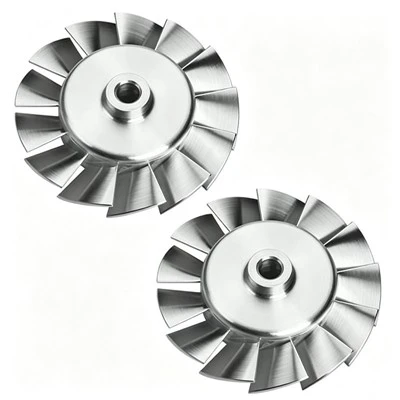
Then there’s the type of parts you can make. Conventional machining is limited to simpler shapes: cylinders, flat blocks, basic grooves, right angles. If you need a part with curved contours, internal threads in weird angles, or multiple sides with tight tolerances that all line up? Conventional can do it, but it’s a nightmare for the operator. They’d have to set up the part 3 or 4 times, re-zero the machine, and keep track of every adjustment, leaving room for error. CNC machines can do complex 3D shapes, multi-axis cuts, and even carve intricate details that would take a conventional machinist days to get right. We had a client a few months back who needed a custom impeller for a small turbine—swooping, curved blades that had to be perfectly balanced. There’s no way we could have made that with conventional machining. We used a 5-axis CNC mill, programmed the tool path, and the machine cut every blade exactly as needed. The impeller weighed within 0.02 ounces of the spec, something that would have been impossible with manual work. That’s not to say conventional can’t do complex parts, but it’s way more labor-intensive, error-prone, and expensive for anything intricate.
Skill and labor costs are another big difference, especially from a supplier’s perspective. A great conventional machinist is a rare and valuable talent. It takes 5 to 10 years of on-the-job training to become proficient enough to hit tight tolerances consistently. Those machinists charge top dollar, and if you need one for a long run, you’re paying for their expertise every hour. CNC operators, on the other hand, don’t need 10 years of training—they need to understand how to load parts, monitor the machine, and tweak programs if something goes wrong. The programmers are the ones with specialized training, but a good CNC programmer can write a program that runs the same part on multiple machines, cutting down on labor costs for large runs. That’s why for high-volume jobs, CNC parts are cheaper than conventional. For small jobs or prototypes, though, conventional is often more cost-effective because you don’t have to spend time writing a program and setting up the CNC. It’s a trade-off: labor cost vs. setup cost, depending on the job size.
Flexibility is another angle. Let’s say a client comes to us with a design that needs a last-minute change—like making a hole slightly bigger or adjusting a groove by 0.004 inches. With conventional machining, that’s easy: the operator just adjusts the dial on the mill, no new setup needed. With CNC, we have to pull up the program, make the change, test it on a sample part, and re-run the test. That can add an hour or two of work. But if the change is something bigger—like a whole new shape or tolerance adjustment—conventional might mean scrapping the whole part and starting over by hand, while with CNC, we just tweak the program and re-run. It’s interesting how flexibility swings both ways. Small, last-minute changes favor conventional, but major design changes for production runs are easier with CNC.
Don’t get me wrong, conventional machining still has its place. Like I said earlier, custom prototypes, repair parts for old equipment, jobs where you only need 1 or 2 parts—those are perfect for conventional. And sometimes, even when using CNC, we still have to do a bit of conventional work to finish a part. CNC can cut most of it to spec, but a tiny edge break or a custom fit adjustment is easier with a manual tool. But for most high-volume, high-tolerance, complex parts, CNC is the way to go.
At the end of the day, the choice between CNC precision machining and conventional precision machining depends entirely on your job. If you’re making a one-off prototype, conventional might be faster and cheaper. If you need hundreds of identical, super-tight-tolerance parts, CNC is the only reliable way to get consistent results. As a precision machining supplier, my job isn’t to push one over the other—it’s to figure out what you need, recommend the right method, and deliver parts that work for your project.
If you’re working on a project and aren’t sure which approach is best, or if you need a quote for precision-machined parts, hit us up. We’ve got the experience to walk through your needs, whether it’s a single custom part or a large production run, and make sure you get exactly what you need. Don’t guess—let’s talk through it.
Casting Part Machining References:
- “CNC vs Conventional Machining: Key Differences and Use Cases,” Modern Machine Shop, 2022.
- Tolerance Analysis for Precision Machining, Society of Manufacturing Engineers, 2021.
- “The Evolution of Precision Machining,” Manufacturing Engineering, 2020.
Ningbo Yirui Machinery Manufacturing Co., Ltd.
As one of the most professional precision machining manufacturers and suppliers in China, we’re featured by quality products and good price. Please rest assured to wholesale durable precision machining made in China here from our factory. Customized orders are welcome.
Address: No.107, Wanzhong Village, Jishigang Town, Haishu District, Ningbo City
E-mail: James.he@yiruitek.com
WebSite: https://www.yiruime.com/
