Hey everyone,
As a building wire supplier who’s fielded hundreds of questions from electricians, contractors, and even DIY homeowners over the last 10+ years, I can’t tell you how many times someone’s stopped me at a job site and asked: “Wait, which wire do I use for general lighting?” It sounds simple, right? Just grab whatever’s labeled “lighting wire” from the supply closet. But trust me—pick the wrong one, and you’re looking overloaded circuits, overheating wires, or even a code violation that’ll hold up your final inspection. Today, let’s break this down like we talk at the trade counter—no boring textbook jargon, just what actually works for your average residential or small commercial lighting setup. Building Wire
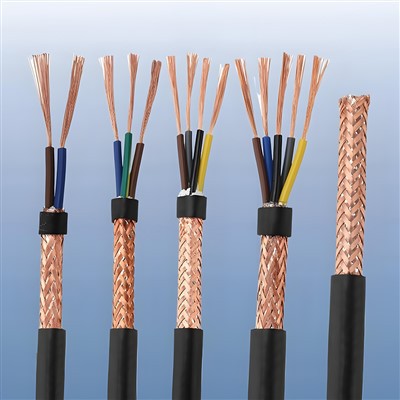
First off, let’s start with the basics: general lighting, 9 times out of 10, is low-current stuff. We’re talking recessed cans, pendant lights, table lamps, maybe a few wall sconces—nothing like a range oven or a power tool that draws 20+ amps. That means the wire you pick doesn’t need to be thick enough for heavy loads, but it does need to be up to code for where it’s running. Let’s cut to the most common type everyone’s familiar with: NM cable. Yeah, that’s the Romex you’ve had in your truck since your first apprenticeship—NM stands for Non-Metallic, and it’s the go-to for most indoor residential runs in walls, attics, and basements. Wait, but not all NM is the same, right? For general lighting, you want NM with a copper conductor (aluminum is cheaper, but it’s a pain to splice and can corrode over time, so we don’t recommend it for lighting anymore) and a 14-gauge wire. Let me explain why that matters: 14-gauge copper wire is rated for 15 amps max, which is exactly the NEC (National Electrical Code) sweet spot for 120V general lighting circuits. The average lighting circuit in a home can handle about 1,800 watts—way more than your typical bedroom or living room lights, which rarely add up to 1,000 total. I’ve seen guys grab 12-gauge “just to be safe,” and while that’s not dangerous, it’s overkill. Thicker wire costs more, takes up more space in boxes, and you don’t need it for lighting. 14-gauge is the standard for a reason.
Now, hold on—NM isn’t the only game in town. What if you’re running lighting in an area where NM can’t be used? Like a basement that’s unfinished, or an attic where there’s exposure to physical damage or extreme temperatures? That’s where THHN/THWN-2 wire comes in. This is a single conductor wire, not a jacketed cable like Romex, so you have to pull it through conduit. But don’t sleep on it—THHN/THWN-2 is super durable, rated for both indoor and outdoor use (the “THWN” part stands for “Thermoplastic Heat and Water-resistant Nylon-coated,” and the -2 means it’s good for 90°C in dry locations, 75°C in wet), which makes it perfect for running to exterior lights, or even for lighting in commercial spaces where conduit is required. For general lighting with THHN, you’ll still stick with 14-gauge copper, same as NM—just make sure it’s the THWN-2 rating specifically, not the old THHN that only works in dry locations. I see contractors grab the wrong THHN all the time for exterior runs, and that’s a quick way to get a service call later when the wire cracks from water exposure.
Wait, let’s talk about commercial lighting, too—because this isn’t just for houses. If you’re working on a small office, retail space, or restaurant’s general lighting, the rules shift a little. Most commercial spaces use a mix of 120V and 277V lighting (think LED panels, track lighting, maybe exit signs). For 120V commercial general lighting, same as residential: 14-gauge copper, either NM if it’s inside walls, or THHN if it’s in conduit. But for 277V commercial lighting? You still want 14-gauge, but make sure the wire is rated for 277V applications—some THHN wire is only rated for 600V, which is fine, but confirm it’s compatible. I’d also mention that some new construction commercial builds are using MC cable (Metal Clad, the armored stuff) for exposed runs, because it’s safer against physical damage than NM, and you don’t have to pull conduit. MC cable with a 14-gauge copper conductor is another solid pick for general lighting in commercial spaces where you don’t want bare conductors exposed.
Now, the big mistake I see all the time: mixing up gauge sizes. Let’s clear this up once and for all—wire gauge is inversely related to ampacity (the amount of current a wire can safely carry). Thinner number = thicker wire. 14-gauge is thinner than 12-gauge, which is thinner than 10-gauge. So if you use 12-gauge for lighting, that’s 20 amps max, which could work for a heavy lighting circuit, but it’s overkill and costs you extra. If you use 16-gauge (which is thinner than 14) for lighting? That’s only 13 amps max, which is too small for a standard 15-amp circuit—way too much risk of overheating. A lot of DIYers grab 16-gauge from big-box stores because it’s cheaper, but that’s a recipe for a breaker tripping constantly, or even a fire hazard. I’ve had a customer come to me last year with a house where a DIYer used 16-gauge for all their living room lights—they had three recessed cans, a ceiling fan, and a TV on the same circuit, and the wire was overheating so bad the insulation was melting. Don’t cut corners here. Stick to 14-gauge copper for general lighting, 120V, residential or small commercial, and you’re 90% there.
Another thing to consider: where the wire is installed. If you’re running lighting in an attic that gets really hot (like above a kitchen, where temperatures can hit 140°F in summer), you need to make sure the wire’s insulation is rated for high temps. NM cable comes in different heat ratings—most standard NM is rated for 60°C, but there’s also NM-B (the “B” stands for “Building,” right?) that’s rated for 90°C. For hot attics or basement runs where there’s insulation contact, go with NM-B, not the old NM. I always tell guys to stock NM-B in their trucks, because it’s versatile for almost all indoor lighting runs. If you’re running outside, like for a patio light or a landscape lighting path? Wait, hold on—landscape lighting is low-voltage (12V or 24V), so that uses low-voltage wire, not the 120V building wire we’re talking about here. Don’t mix those two! I see contractors try to use NM for landscape lights all the time, and that’s a code violation—low-voltage needs its own specific wire, usually copper with a UV-resistant jacket.
Let’s also talk about code, because this isn’t just a suggestion. The NEC (National Electrical Code) is the bible here, and it’s clear: general lighting circuits in 120V systems are 15-amp circuits, which require 14-gauge copper wire. You can’t use aluminum for this because aluminum has higher resistance, so you need a thicker gauge for the same ampacity, which is more expensive, and aluminum wiring requires special connectors to prevent connection issues. So even if aluminum is a little cheaper upfront, it’s not worth the hassle for general lighting. I’ve been in the business long enough to see the bad outcomes of aluminum wiring for lighting—loose connections, overheating, even fires. So copper non-negotiable for general lighting.
Wait, what about older homes? If you’re rewiring a 1950s house that already has knob-and-tube wiring? That’s a whole other story, but for general lighting in that case, you’d still run 14-gauge NM or THHN, because knob-and-tube isn’t suitable for new general lighting circuits. But if you’re replacing existing lights, you’d just match the old wire gauge—most old homes use 14-gauge too, so that’s still fine.
Now, let’s get practical, from a supplier’s perspective. I know contractors are always looking to save time and money, so here’s what I recommend for your lighting jobs: keep a stack of 14/2 NM-B (that’s two conductors plus a ground wire, which is exactly what you need for most lighting runs—hot, neutral, ground) in your supply truck. For any run that’s going in conduit (exterior, commercial, unfinished areas), stock 14-gauge THWN-2 copper. Don’t overstock 12-gauge for lighting—save that for outlets or heavy appliances. And always, always double-check the wire’s rating: if it’s for a wet location (like a light outside, in a bathroom), make sure it’s listed for wet use. THWN-2 is wet-listed, standard NM is only for dry locations, so if you’re running lighting in a bathroom (which has high humidity), you need a wet-rated wire. I see guys grab standard NM for bathroom lights all the time, and the insulation breaks down within a few years from the moisture.
Let me wrap this up with a quick real example that drove this home for me. Last month, a contractor brought a sample of wire he’d bought from a random online supplier—he used it for a restaurant’s general lighting, and half the circuits kept tripping. He showed me the wire: it was labeled “14-gauge copper,” but when I checked the ampacity, it was a 16-gauge conductor with fake markings. Cheap, counterfeit wire is a real problem, so as a supplier, I make sure all my wire is UL-listed, meets NEC standards, and is clearly marked with the gauge and rating. That’s why it’s important to work with a reputable supplier—you don’t want to risk bad wire on a job, especially for general lighting, which is something people use every single day.
At the end of the day, general lighting wire isn’t rocket science, but it’s not just “any wire.” Stick to 14-gauge UL-listed copper: NM-B for indoor wall/attic runs, THWN-2 in conduit for exposed or wet locations, and make sure you’re matching the code for your space. No overkill, no underkill, no counterfeits.
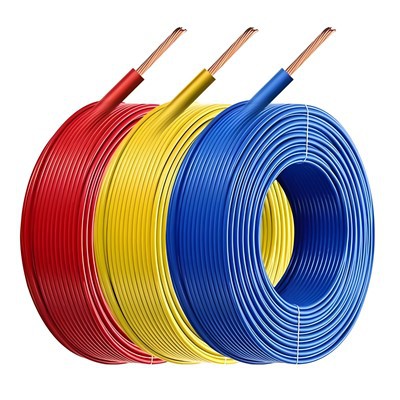
If you’re working on a lighting project and need help picking the right wire, or want to make sure you’re stocked with the right stuff for your next job, hit me up—we can walk through exactly what you need, no sales pitch, just real advice from someone who’s been in the field as long as I have.
Building Wire References
National Electrical Code (NEC) Article 210, 2020 Edition
Underwriters Laboratories (UL) Standard 83, for Non-Metallic Sheathed Cable
Underwriters Laboratories (UL) Standard 83, for Thermoplastic Insulated Wire and Cable
Hebei Liangyu Cable Co., Ltd.
We’re well-known as one of the leading building wire manufacturers and suppliers in China, specialized in providing high quality customized service. We warmly welcome you to buy durable building wire made in China here and get pricelist from our factory. For price consultation, contact us.
Address: Yanbai Industrial Zone, Jiajiakou Town, Ningjin County, Xingtai City, Hebei Province
E-mail: 18932990441@163.com
WebSite: https://www.liangyucable.com/
