If you’ve ever walked past a warehouse loading dock cluttered with loose cardboard bales, plastic wrap, or scrap metal waiting to be hauled to a recycling center, you’ve seen a gap semi-automatic waste balers are built to fill. As a supplier of waste management equipment, I get this question at least a dozen times a week: what exactly is a semi-automatic waste baler, and how is it different from other machines that compact waste? Let’s break it down in plain, practical terms—no overly technical jargon, just what matters for anyone managing waste in a small business, a retail chain, a factory floor, or a municipal recycling depot. Waste Baler
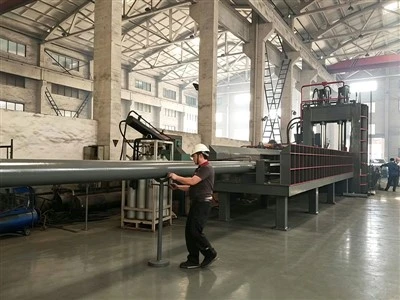
First, let’s start with the basics: waste balers in general are machines designed to compress loose, bulky waste into dense, uniform blocks called “bales.” The point of this isn’t just to cut down on clutter (though that’s a nice side effect). Dense bales take up 70 to 80 percent less space than loose waste, so you make fewer trips to landfills or recycling centers, cut fuel and labor costs, and many recycling centers actually pay you for baled materials because they’re easier to sort and process. That’s why businesses of all sizes rely on them.
Now, where semi-automatic balers fit in the lineup of baler types. You’ve got manual balers, which are small, hand-operated units for tiny operations like a corner café that only generates a few cardboard boxes a week. Then there are fully automatic balers, which are massive, industrial-grade machines that can run 24/7, tie bales automatically, and even feed waste in without human input—think a large Amazon distribution center or a metal recycling yard. Semi-automatic is the middle ground, and that’s why it’s the workhorse for most mid-sized operations.
So, what makes a baler “semi-automatic”? Let’s get specific. Unlike manual balers, which require you to do most of the physical work of loading waste and applying pressure, semi-automatic balers have a powered hydraulic system that does the heavy lifting of compression. But unlike fully automatic balers, they don’t handle every step on their own. Here’s the step-by-step breakdown of how one works, to make it clear:
First, you load the waste into the baler’s chamber. That’s usually a large, hinged door on the side or top, big enough to fit full cardboard boxes, loose plastic bottles, or shredded paper. This is a manual step, but it’s pretty straightforward—no special training needed for most models.
Next, you activate the hydraulic compression. Some models let you hold a button to start the ram (the metal plate that presses waste) moving, while others use a foot pedal for convenience, so you can keep your hands free to load. The ram will compress the waste in stages: first it packs lightly, then builds up to the full pressure of usually 20 to 50 tons, depending on the size of the baler. For context, that’s enough pressure to turn a stack of 10 loose cardboard boxes into a solid 40-pound bale that’s easy to carry.
Once the chamber is fully compressed, the semi-automatic part kicks in. Unlike automatic balers that automatically wrap and tie the bale before ejecting it, semi-automatic balers require you to tie the bale yourself. Most use heavy-duty polypropylene twine or metal strapping—you feed the twine through slots in the sides of the baler’s chamber while the waste is still compressed, then tighten and secure it. Some newer semi-automatic models have an optional auto-tie feature, but even those require a quick manual step to lock the tie in place.
Finally, you release the compression and the finished bale drops out the front of the baler, ready to be hauled away. That’s the semi-automatic difference: you control the loading and tying steps, but the machine does all the hard work of squeezing the waste into a dense block.
Now, let’s talk about who this machine is for, because that’s where its value really shines. Let’s use real examples from customers I’ve worked with over the years, to make this concrete. I had a customer who ran a chain of 15 grocery stores across the Midwest: each store generates about 500 pounds of cardboard and plastic wrap a week from product packaging. A fully automatic baler would have cost them $30,000, which was way more than their budget, and too big for the back of each store. A manual baler would take two workers an hour a day to use, since they had to lift the ram manually and tie each bale with extra effort. Semi-automatic balers fit perfectly here: each store has a 4-foot model that takes one 10-minute block of time a day to use, costs about $8,000, and cuts their landfill trips from twice a week to once every two weeks.
Another common user is small to mid-sized manufacturers. A custom furniture maker I work with generates scrap wood and foam padding from their production runs—loose, bulky stuff that was taking up half their warehouse floor space. They switched from renting a dumpster twice a month to two semi-automatic balers, and now they sell the baled wood to a local pallet recycling company for extra pocket money, which they put toward employee benefits. That’s the kind of return on investment that makes semi-automatic balers a no-brainer for operations that don’t need 24/7 production capacity but still deal with dozens of tons of waste a year.
Now, let’s bust a few common myths about semi-automatic waste balers, because I get these all the time. First myth: they’re too slow. People often assume automatic is faster, but for most mid-sized operations, the bottleneck isn’t the baler—it’s how much waste you can load into it. A semi-automatic baler can produce 5 to 10 bales an hour, which is more than enough for a store or small factory. Automatic balers only shine if you’re running 20+ bales a day, which most small businesses aren’t.
Second myth: they’re not as durable as automatic models. That’s not true, either. Semi-automatic balers are built with heavy steel frames and hydraulic systems that are designed for continuous, daily use. Most of the ones my company sells come with a 5-year warranty on the hydraulic parts, same as premium automatic models. The key is to choose a model sized for your waste volume—don’t buy a tiny 2-foot baler for a store that generates 500 pounds of waste a week, and you’ll get 10+ years of use out of it.
Third myth: you need special training to operate one. I’ve had customers as young as 16 (part-time warehouse workers) operate a semi-automatic baler after a 10-minute walkthrough. The controls are simple: a start button, a stop button, and a pressure gauge. The only real safety thing to remember is to never put your hands inside the compression chamber while the ram is moving, which is true for any baler, manual or automatic.
Let’s also talk about the materials semi-automatic balers handle, because that’s another point that comes up. They’re not just for cardboard—they can handle plastic bottles, plastic wrap, aluminum cans, scrap metal, shredded paper, textiles, and even certain types of food waste (though you’ll want a specific model with a sealed chamber for food waste to prevent odors). If your waste is a mix of these materials, you can even get a baler with interchangeable heads to switch between compressing different materials without buying a whole new machine.
Now, what about the cost vs. benefit? Let’s do a quick real-world numbers example, to show how it pays off. Let’s say your business pays $50 a dumpster pickup, and you pick up twice a week: that’s $5,200 a year in landfill costs. If a semi-automatic baler costs $8,000, but cuts your pickups to once every two weeks, that’s $1,300 a year in landfill costs. You also save on labor: instead of two workers spending 2 hours a week loading loose waste, one worker spends 10 minutes a day on the baler, so that’s 15 hours of labor a week saved, which is another $4,500 a year if you pay a worker $15 an hour. Add in any revenue from selling baled recyclables (many centers pay $50 to $100 a ton for baled cardboard), and you could be recouping the cost of the baler in 12 to 18 months, which is way faster than most industrial equipment.
For people considering if a semi-automatic baler is right for them, here are a few questions to ask yourself: How much waste do I generate in a week? If it’s 200 to 2,000 pounds, semi-automatic is a perfect fit. If it’s less than 200 pounds, a manual baler will work better. If it’s more than 2,000 pounds, you might want to look at automatic or high-production semi-automatic models. Do I have space for a machine that’s about 4 to 8 feet long and 3 to 5 feet wide? Most small to mid-sized semi-automatic balers fit in a standard storage area at the back of a store or warehouse, no extra construction needed. Do I have the budget for upfront cost between $5,000 and $15,000? That’s the range for quality semi-automatic models, and the long-term savings will almost always add up.
As someone who’s sold waste management equipment for more than a decade, I can tell you that the biggest mistake businesses make is overbuying a baler. I’ve had a small coffee roaster come to me with a $20,000 budget because they thought they needed an automatic baler, only to find a $6,000 semi-automatic baler that fits their needs perfectly and saves them $10,000 a year in landfill costs. The sweet spot for semi-automatic is that it’s flexible enough to grow with your business, too: if you expand and generate more waste in a few years, most semi-automatic models can be upgraded with auto-tie features or larger chambers, so you don’t have to replace the whole machine.
At the end of the day, a semi-automatic waste baler isn’t just a piece of equipment—it’s a way to reduce clutter, cut costs, and even generate extra revenue from waste that was previously just going to a landfill. For most small to mid-sized businesses, it’s not a luxury; it’s a practical investment that pays for itself in under two years.
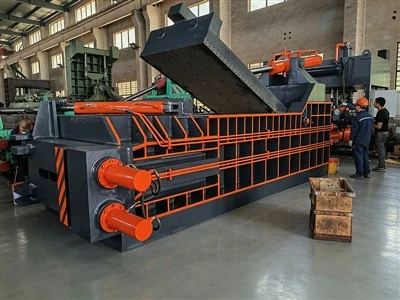
If you’re ready to find the right semi-automatic baler for your operation, or you have questions about which size or model fits your waste needs, reach out to our team to connect for a purchasing consultation. We work with businesses across industries to find equipment that matches their budget and volume, so you don’t end up overpaying for something you don’t need or underbuying and having to replace it in a year. Don’t let your waste take up unnecessary space or cost you more than it should—let’s find a solution that works for you.
Vibrating Screen for Scrap Steel References
- Environmental Protection Agency (EPA). (2022). Global Waste Management Facts: Reducing Landfill Through Compaction and Baling.
- Institute of Scrap Recycling Industries (ISRI). (2021). Commercial Waste Baling Equipment: Operational Cost and Efficiency Guidelines.
- National Retail Federation (NRF). (2020). Small Business Waste Management: Cost Savings From Baling Packaging Materials.
- Hydraulic Machinery Association of North America (HMANA). (2021). Safety and Performance Standards for Semi-Automatic Waste Compaction Equipment.
Jiangyin Hangli Technology Co., Ltd.
Jiangyin Hangli Technology Co., Ltd. is one of the most professional waste baler manufacturers and suppliers in China. We are committed to providing high quality custom service and OEM service with low price. We warmly welcome you to buy high-performance waste baler for sale here from our factory. Also, pricelist is available.
Address: No. 11, Louxia Road, Zhouxi Village, Zhouzhuang Town, Jiangyin City, Wuxi City, Jiangsu Province, China
E-mail: sherry@hanglimachinery.com
WebSite: https://www.hanglirecycling.com/
