If you’ve ever had to move heavy, irregular, or sticky materials—think crushed stone, fresh bakery dough, or agricultural produce like apples or bananas—you’ve probably worked with a profiled conveyor belt without even realizing it. Unlike flat belts, these belts have custom-shaped ridges, cleats, or sidewalls that keep materials from slipping, spilling, or rolling during transport, especially when routes tilt or curve. As someone who’s been supplying custom profiled conveyor belts for nearly 12 years, I can’t tell you how many times I’ve gotten calls from new customers who expect a straightforward, one-size price for a belt. “It’s just a conveyor belt, right?” they’ll say. But anyone in the industry will tell you there’s no simple answer to, “What’s the cost of a profiled conveyor belt?” The price isn’t pulled out of thin air—it’s tied to the specific job the belt has to do, the materials it moves, and the long-term performance a business needs. Let me break down what goes into that price, from the small details that most people overlook to the big-picture factors that make or break a belt’s value. Profiled Conveyor Belt
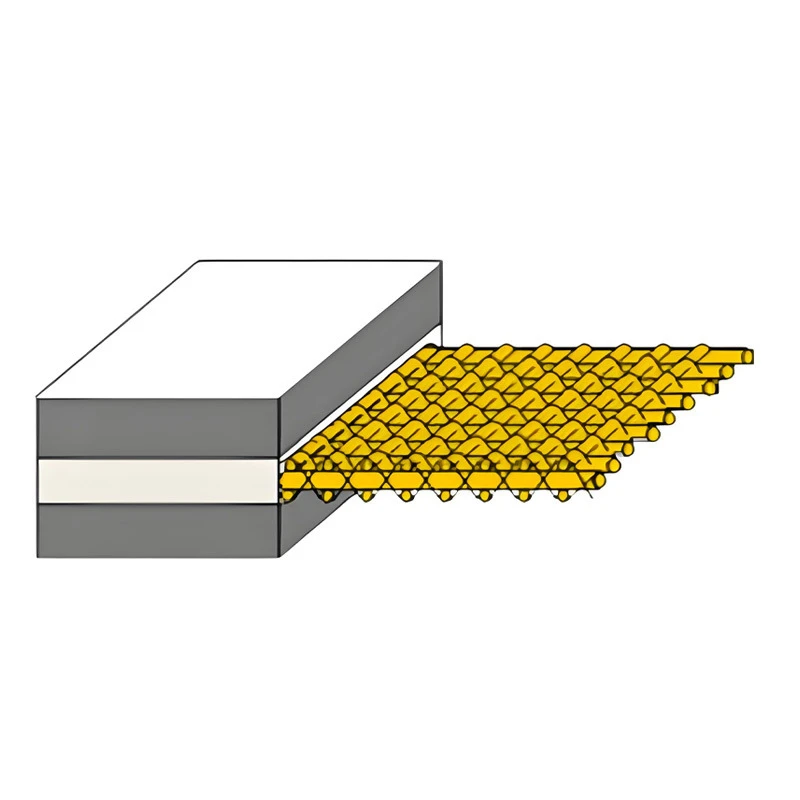
First, let’s talk about the core components that make a profiled conveyor belt different from a flat one, because those components are where the cost starts to add up—for good reason. The base belt itself is the foundation, and it’s not a one-size-fits-all part. If you’re moving mild, dry materials like grain, a standard rubber base might work fine, but if you’re moving hot clinker from a cement kiln (temperatures can hit 500°F or higher) or sharp, abrasive rock, you need a base made of heat-resistant, abrasion-rated rubber, or even synthetic fabrics like nylon or polyester, or metal for extreme conditions. Each of those materials costs more than a generic flat belt base, but cutting corners here means the belt will wear out in months instead of years.
Then there are the profiles—cleats, ribs, sidewalls, or chevrons— that make the belt “profiled.” This is where most of the customization lives, and it’s where prices can swing wildly. The shape of the profile matters a lot: a simple, 1-inch square cleat for moving gravel uphill is way cheaper than a custom V-shaped chevron for transporting packaged food on a decline, because the chevron has to be precisely spaced to grip the product without damaging it, and the material has to be food-grade. The size matters too: higher cleats mean more support for tall, bulky loads, but they require more material and take longer to mold or attach, so that adds to the cost. Even the attachment method plays a role: some small cleats are molded directly into the belt during manufacturing, which is strong and seamless, but more expensive than bolts or adhesives for larger profiles. I remember a customer in the logging industry who came to me a few years back asking for a belt to carry rough, splintered wood chips on a steep incline. He initially asked for 2-inch cleats, but once we ran the numbers, 4-inch cleats were only $150 more per belt and would cut his annual replacement costs by almost 70%. That’s the kind of tradeoff I walk every customer through.
Next, the load being moved is probably the biggest driver of cost. Let’s be real: moving 50-pound bags of flour around a bakery is way different than moving 2,000-pound rolls of steel through a manufacturing plant. For abrasive materials like sand, glass, or concrete, the belt’s surface has to be thicker and harder to resist wear, which means more raw material and longer production time. For sticky materials like wet cement or chocolate dough, the belt might need a special non-stick coating to keep the product from clinging, which is another add-on cost. Even the weight of the load over time matters: a belt used for a few hours a day in a warehouse won’t need the same heavy-duty construction as a belt running 24/7 at a mining site. We recently had a customer in the recycling industry who initially priced out a standard profiled belt for moving crushed metal, but after testing, his team found the metal was so abrasive that the belt would wear through the core in 8 months. We switched him to an abrasion-rated synthetic core, and even though the belt cost 25% more upfront, he only has to replace it every 3.5 years. That’s a no-brainer for operations that rely on conveyor belts to keep their supply chain moving—downtime from a failed belt costs way more than the belt itself.
Then there are the environmental and operational factors that most customers don’t think about until it’s too late. If a belt is going to be used outside in freezing temperatures, standard rubber will harden and crack, so you need cold-resistant compounds that cost 10-15% more. If it’s going to be near chemicals, like in a fertilizer plant, it needs chemical-resistant coatings, which add even more. Curved conveyors, which are common in distribution centers to save floor space, need special sidewalls and profile designs that can bend without tearing—those belts are often 20-30% more expensive than straight-run profiled belts. We also do a lot of custom work for food and pharmaceutical companies, where the belt has to meet FDA or EU food safety standards, meaning no toxic additives, smooth surfaces that don’t harbor bacteria, and special release agents. Those certifications don’t come cheap, but they’re non-negotiable for businesses in regulated industries.
Wait, but what about bulk pricing? A lot of new customers ask if buying 10 belts will be cheaper than buying one, and the short answer is usually yes, but not as much as you might think. Profiled belts have custom molds, so the first belt of a specific design will have a setup cost that’s spread across the order. If you buy 1 belt, that setup cost is a bigger percentage of the total price than if you buy 10 or 20. But it’s not just volume—repeat customers often get discounts because we know their needs, can reuse molds, and streamline production. That’s why building a long-term relationship with a supplier is worth more than just getting the lowest upfront price.
Now, let’s talk about value, not just cost. I’ve had customers call me after buying a cheap profiled belt from a no-name supplier, only to complain that it split after 3 months, spilled half their load, and shut down their operation for a week. When we price a belt, we’re not just charging for rubber and fabric—we’re charging for design, testing, warranty, and support. Every belt we sell gets a custom design based on the customer’s specific application, we test prototypes to make sure they can handle the load, and we offer a 2-year warranty on all materials and workmanship. When a customer has an issue, I’m the one they call—no automated phone system, no third-party support. That’s a big part of the cost that isn’t always obvious on the invoice.
So, to give you a rough ballpark (I always hate doing this because it’s so variable), a basic profiled conveyor belt for light loads, like bakery products or small grain, might start around $2 per square foot. A mid-range belt for general industrial use, moving dry, moderately abrasive materials, can run $3-$8 per square foot. Heavy-duty belts for mining, quarrying, or extreme temperatures can be $10-$25 per square foot, and custom, regulated belts for food or pharmaceuticals can go even higher. But here’s the thing: that square foot price is only half the story. The other half is the lifespan, the downtime, and the performance. A $2 per square foot belt that lasts 6 months is $4 per month per square foot. A $7 per square foot belt that lasts 3 years is less than $0.20 per month per square foot. That’s the math I show every customer, and it usually changes their perspective.
At the end of the day, the cost of a profiled conveyor belt isn’t a number you can get from a website or a catalog. It’s a custom calculation based on your materials, your environment, your production schedule, and your long-term goals. I’ve been doing this for long enough that I can listen to a customer describe their operation and give them a realistic idea of what they’ll need, without selling them something they don’t want or cutting corners that will hurt their business.

If you’re in the market for a profiled conveyor belt, don’t just go for the lowest bid. Ask about the material ratings, the profile design, the warranty, and the support. Reach out, tell me about your application—what materials are you moving? What’s the incline or curve of your conveyor? What’s your production schedule? I can walk you through the options, help you find the right balance of upfront cost and long-term value, and make sure you get a belt that keeps your operation running smoothly for years.
Aramid Conveyor Belt References
- Conveyor Equipment Manufacturers Association (CEMA). (2020). Belt Conveyors for Bulk Materials, 7th Edition. CEMA.
- Rubber Manufacturers Association (RMA). (2019). Standard Specifications for Conveyor Belting. RMA.
- Occupational Safety and Health Administration (OSHA). (2021). Conveyor Safety Standards for General Industry. OSHA.
- Food and Drug Administration (FDA). (2022). Food Contact Substance Notifications for Conveyor Belt Materials. FDA.
- European Committee for Standardization (CEN). (2020). Conveyor Belts for Industrial Use – Safety Requirements. CEN.
Alumina Technology (Qingdao) New Materials Co., Ltd.
As one of the most professional profiled conveyor belt manufacturers and suppliers in China, we also support customized service. With abundant experience, we warmly welcome you to buy profiled conveyor belt for sale here and get quotation from our factory. For price consultation, contact us.
Address: No.448, Jiangshan South Road, Huangdao District, Qingdao City, Shandong Province
E-mail: Gloria.zhang@contitech.cn
WebSite: https://www.altechconveyorbelt.com/
