If you’ve ever sat in on an orthopedic or general surgery, you’ve probably noticed the thin, almost invisible wires holding bones, sutures, or medical devices in place as a patient heals. As a supplier of medical titanium wires, I get more questions about these small, critical components than any other product we carry, and one question keeps rising to the top: “What grade titanium is best for surgical wires?” Medical Titanium Wires
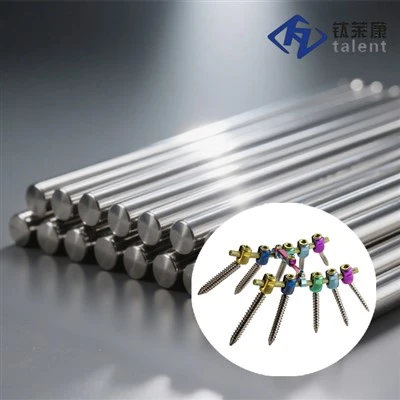
It’s not a trivial question, either. Surgical wires aren’t the same as the titanium hardware most people picture—they don’t replace a hip or a knee, and they don’t live in the body for 10, 15, or 20 years. But they are often the unsung heroes of recovery: a temporary stabilizing suture wire for a tendon repair, a wire to set a broken finger or toe, or a retention wire holding a pacemaker lead in place. The wrong grade of titanium here doesn’t just mean a part that fails—it can mean a patient needing a second surgery, or worse. Over the 12 years I’ve been sourcing and supplying titanium wires to surgeons, orthopedic device manufacturers, and trauma clinics across North America and Europe, I’ve learned that the answer isn’t just about “the strongest” or “the cheapest.” It’s about balancing biocompatibility, flexibility, corrosion resistance, and ease of use in an OR suite, all while meeting the strict ISO and FDA standards that govern medical devices.
Let’s start with the basics. Not all titanium is created equal, and when it comes to medical use, the industry standard grades are defined by their purity and alloy content. Grade 1, Grade 2, Grade 3, Grade 4, and the Ti-6Al-4V alloy (most commonly called Grade 5) are the core medical titanium grades, each with distinct properties that make them better suited for different applications. Surgical wires, in particular, have unique demands: they need to be thin enough to thread through tissue without causing extra damage, strong enough to pull and hold a tendon or bone fragment, flexible enough to bend without breaking during placement, and resistant to the corrosive environment inside the body—where salt, blood, and other bodily fluids can cause metal to degrade. Degradation isn’t just a matter of a wire breaking; tiny metal particles released from corroded titanium can trigger inflammation, or even require removal later.
When I first started in this business, I thought Grade 5 titanium would be the obvious choice for surgical wires. After all, Grade 5 is the workhorse of medical implants, used for everything from hip stems to dental implants, famous for its high strength-to-weight ratio. But after working with hundreds of surgeons, I quickly learned that Grade 5 has a major downside for wires: it’s much stiffer than pure titanium grades. For example, a 0.5mm wire made of Grade 5 has a tensile strength of around 900 MPa, while a Grade 2 wire of the same size has a tensile strength of around 240 MPa. That might sound like Grade 5 is better, but in practice, that stiffness is a problem when you’re threading a wire through delicate tissue like a flexor tendon in the hand. A stiff Grade 5 wire doesn’t bend as easily, so it can tear through tissue during placement, leading to longer surgery time and more patient trauma. Also, while Grade 5 is biocompatible, the alloying elements (aluminum and vanadium) can, in rare cases, trigger adverse reactions in sensitive patients—something that pure titanium grades avoid entirely. That’s not to say Grade 5 is never used for wires; it’s great for heavy-duty applications like external fixation wires, where extra strength is needed for stabilizing large bone fragments. But for the vast majority of routine surgical wires—like those used for tendon repairs, skin sutures, or internal retention wires—Grade 5 is overkill, and actually counterproductive.
Which brings me to Grade 2 titanium, the unsung star of surgical wires. Let’s get this out front: Grade 2 is not pure titanium—technically, Grade 1 is the purest, at 99.6% titanium, with Grade 2 at 99.5% titanium, small amounts of iron and oxygen. But that tiny difference in purity is what makes Grade 2 the sweet spot for surgical wires. First, it’s incredibly biocompatible. Surgeons and tissue pathologists have trusted Grade 2 for decades because it rarely triggers adverse reactions. It’s so compatible with human tissue that when it’s implanted, the body forms a thin, stable layer of tissue around it (called osseointegration, though for temporary wires it’s just a gentle adherence that helps hold it in place temporarily) without inflammation. That’s a big deal for patients who might have metal sensitivities—an increasingly common concern as more people get medical devices.
Second, Grade 2 has the perfect balance of flexibility and strength for surgical wires. Earlier, I mentioned the tensile strength of Grade 2 vs Grade 5. What I didn’t mention is that Grade 2 is also much more ductile—it can bend and flex without breaking, which is critical for wires that have to be shaped during placement. A Grade 2 wire can be threaded through a small incision, bent around a bone fragment, and tied into a secure knot without snapping, something that stiffer alloys like Grade 5 can’t do. For orthopedic surgeons doing hand or foot surgery, where precision is everything, that flexibility is a game-changer. I remember a conversation I had with an orthopedic hand surgeon in Chicago three years ago. He told me he used to use stainless steel wires for tendon repairs, but patients were coming back with tissue irritation because stainless steel corrodes more easily in the body. Then he switched to Grade 2 titanium wires, and the number of follow-up visits for irritation dropped by 80%. “These wires move with the hand, not against it,” he told me. That’s exactly what we strive for as suppliers: a wire that works with the surgeon, not against them.
Another huge advantage of Grade 2 for surgical wires is its corrosion resistance. Pure titanium forms a thin, self-healing oxide layer on its surface when exposed to air or bodily fluids. This layer is what prevents the metal from corroding, and Grade 2’s small amount of alloying elements actually makes this oxide layer even more stable than that of purer grades like Grade 1. In the harsh, salt-rich environment inside the body, that stable oxide layer means the wire won’t break down over time, releasing metal particles. That’s crucial because surgical wires are often left in the body for weeks or even months while the patient heals—think about a wire holding a broken finger bone in place, which will stay there for 6 to 8 weeks. A corroded wire can break, leading to a loss of stability and more surgery, or release particles that cause inflammation and pain. Grade 2’s corrosion resistance eliminates that risk almost entirely.
But wait—what about Grade 1 and Grade 4 titanium? Why don’t we use those for most surgical wires? Grade 1 is the purest, so it’s even more biocompatible, and more flexible than Grade 2. But it’s also much weaker. A 0.5mm Grade 1 wire has a tensile strength of only around 180 MPa, which is not enough to hold heavy loads, like a large bone fragment or a tight tendon suture. You’d need a much thicker wire to get the same strength as Grade 2, and a thicker wire means more tissue damage during placement—something surgeons avoid at all costs. Grade 4, on the other hand, is stronger than Grade 2 (around 550 MPa for a 0.5mm wire), but it’s much more brittle. It’s harder to bend without cracking, which makes it difficult to work with in the OR. If you drop a Grade 4 wire on the OR table, it might develop a tiny crack that you can’t see, but it will break under load once it’s implanted. That’s a risk no surgeon is willing to take. So Grade 1 is too weak, Grade 4 is too brittle, Grade 5 is too stiff—Grade 2 hits exactly the middle ground that surgical wires need.
Of course, not all surgical wires are the same. There are specialized applications where other grades make sense. For example, orthopedic surgeons using external fixation devices for severe limb injuries often use Grade 5 titanium wires because they need the extra strength to hold large bone fragments in place during healing. Also, for long-term implants like permanent sutures for heart valves, some manufacturers opt for Grade 5 because it’s stronger and more durable for years of use. But these are niche cases. For the 90% of routine surgical wires we supply—tendon repair wires, hand and foot fracture wires, skin retention wires, pacemaker lead retention wires—Grade 2 is the clear choice.
As a medical titanium wires supplier, I’ve spent years testing and validating this, not just with surgeons, but with our own quality control team. Every batch of Grade 2 wire we send out is tested for tensile strength, ductility, and corrosion resistance, to make sure it meets ISO 5832-2 standards (the international standard for Grade 2 titanium for medical devices). We also work with surgeons to refine our wire sizes and finishes—for example, we offer a smooth, polished Grade 2 wire that reduces tissue drag during placement, and a slightly textured wire for applications where extra grip is needed.
I know that when you’re a surgeon or a medical device engineer, you care about more than just the properties of the wire. You care about reliability, consistency, and a supplier you can count on. As someone who’s been in this industry for over a decade, I can tell you that switching to Grade 2 titanium wires is one of the easiest ways to improve patient outcomes and reduce complication rates in surgical procedures. It’s not the cheapest option, but it’s the most cost-effective in the long run—fewer follow-up surgeries, less patient pain, and higher success rates.
If you’re a surgeon, device manufacturer, or clinic looking to upgrade your surgical wires, or if you have specific application needs that require a different grade of titanium, we’re here to help. We work with a wide range of medical professionals to customize wire sizes, finishes, and grades for any procedure, from routine hand surgery to complex orthopedic trauma care. We don’t just sell wires—we partner with our customers to make sure they have the right products for their patients.

To learn more about our medical titanium wires, discuss your specific application needs, or place an order, feel free to reach out to our team. We’re always here to answer questions, provide product samples, or walk you through the properties of different titanium grades to find the best fit for your work.
Industrial Titanium Bars References
- ASTM International. Standard Specification for Wrought Titanium-1 Alloy for Surgical Implants (UNS R50250). ASTM F67-19.
- ISO. Implants for Surgery — Metallic Materials — Part 2: Wrought Titanium. ISO 5832-2:2019.
- Brunski, J.B. 1999. “Implant Dentistry Materials and Designs.” Critical Reviews in Oral Biology & Medicine, vol. 10, no. 2, pp. 165-203.
- Hutt, M.S., et al. 2017. “Titanium Alloys for Medical Implants: A Review of Biocompatibility and Corrosion Behavior.” Journal of Materials Science: Materials in Medicine, vol. 28, no. 11, article 167.
- Trumble, T.E., et al. 2020. “Hand Tendon Repair Materials and Techniques: A Review.” Journal of Hand Therapy, vol. 33, no. 4, pp. 487-495.
Baoji Tailaikang High-Tech Metal Materials Co., Ltd.
With abundant experience, we are one of the most professional medical titanium wires manufacturers and suppliers in China. Please feel free to buy medical titanium wires for sale here and get pricelist from our factory. For price consultation, contact us.
Address: No.1, Southeast Cross of Gaoxin Avenue and Fenghuang 3rd Road, High-tech Development Zone, Baoji City, Shaanxi Province, China
E-mail: sale@tlkjs.com
WebSite: https://www.tlkmetal.com/
