If you’ve ever tried to source goods internationally, you’ve probably stumbled on DDP shipping at some point. As someone who runs a Double Clearance and Tax Included DDP supply business, I get so many questions that start the same way: “Can I get a DDP quote without a specific item?” It’s a totally fair question—when you’re in the early stages of sourcing, you might not have locked down a single SKU yet, you’re still comparing product types, or you’re testing the waters for a new market. But if you’ve ever waited days for a vague quote that turns out to be useless, you know there’s a right way and a very wrong way to ask for this. Double Clearance and Tax Included DDP
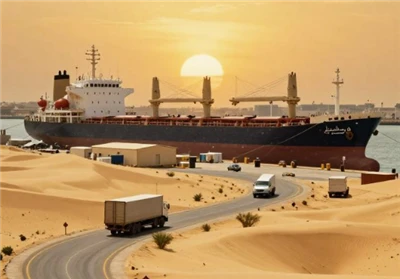
Let me break this down from both sides: what I can and can’t do as a DDP supplier, and what you can do to get a quote that actually works for your business. First, let’s make sure we’re on the same page about what DDP means, because it’s not a one-size-fits-all term. DDP stands for Delivered Duty Paid, which means the supplier handles everything: shipping from the origin factory, customs clearance in both the origin and destination countries, import duties, taxes, and even the final delivery to your door. That’s way more than just a shipping rate—it’s a full end-to-end service, so the item you’re shipping is literally the foundation of that calculation.
When someone asks for a DDP quote without a specific item, here’s what’s running through my head, and I’ll be honest here: I can’t pull a random number out of thin air that will actually be accurate. DDP costs depend on three huge factors tied directly to the product itself, and if you don’t have that item nailed down, none of those add up. Let’s go through them one by one.
First, the product’s classification and HS code. Every product on the planet has a Harmonized System (HS) code, which is a 6-digit (sometimes more) code that customs uses to calculate duties and taxes. A $5 t-shirt has a totally different HS code than a $500 industrial machine part, right? So if you say “I want a DDP quote for clothing” but don’t specify if it’s cotton tees, wool sweaters, or waterproof rain gear, I can’t get the right HS code. That means I can’t calculate the 5% duty rate vs. the 10% duty rate, or the value-added tax (VAT) that applies in your destination country for that specific code. I once had a customer who asked for a DDP quote for “electronics” and left out that it was rechargeable batteries—he ended up with a 20% higher duty charge than quoted, because batteries have a different HS code than regular consumer electronics. That’s the kind of mistake that kills small profit margins.
Second, the product’s dimensions and weight. Shipping costs are based on either actual weight or volumetric weight, whichever is higher. A small, heavy ceramic mug is way different than a large, lightweight foldable chair. If you don’t know the size of the item, how much it weighs, or how many pieces you’re ordering, I can’t calculate the freight cost. Even if you say “I want to order 100 units,” if you don’t know if each unit is 1 pound or 10 pounds, the freight rate could be off by hundreds of dollars. I’ve had new importers come to me with a vague request, and when they finally sent their product specs, the freight cost was 3x higher than the initial quote I gave them just because they didn’t mention the product was unusually heavy.
Third, the product’s declared value. DDP includes covering any duties or taxes, which are usually calculated based on the product’s commercial invoice value. If you don’t tell me what you expect to pay for the item, I can’t account for that. For example, if you want to ship $1,000 worth of small toys, the VAT on that value will be different than if you’re shipping $10,000 worth of the same toys. Also, some countries have minimum values for low-value shipments—if your product is under that threshold, you might qualify for duty exemptions, but that only applies if we know the declared value upfront.
Now, that doesn’t mean I can’t give you a starting DDP quote when you don’t have a specific item. I know you’re in the early stages, so I’ve developed a way to help customers without giving them false information. The key here is to give me as much detail as you can, even if it’s not the final spec. Let me walk you through what I need: first, what type of product are you looking for? Be as specific as possible. Instead of “clothing,” say “100% cotton men’s t-shirts, size S-XXL, for casual wear.” That tells me the HS code is almost certainly 610510 (for cotton men’s shirts), which is specific enough. Second, what’s your target price per unit? Even if it’s a rough estimate, that helps me calculate duties and taxes. Third, what’s the quantity you’re thinking of ordering? MOQs (minimum order quantities) are standard in manufacturing, so if you say you want 500 units vs. 5,000 units, that changes the freight rate per unit too. Fourth, what’s your destination country and city? Customs rules and tax rates vary wildly between, say, Germany and Canada, so that’s non-negotiable.
I once had a new e-commerce seller come to me six months ago. He said he had no specific product yet, but he wanted to start selling pet accessories in the US, and he was testing silicone pet bowls. We walked through the details: silicone is a polymer product, so HS code 392690 (other articles of plastics), he estimated $2 per unit, quantity 1,000 units, destination in Austin, Texas. I gave him a rough DDP quote that included shipping, clearance, duties, and taxes, and he used that to price his products and confirm his business model. A month later, he locked in a specific supplier for the exact bowls, got the final specs, and we adjusted the quote by less than 5%—no surprises, because we had a baseline to work from. That’s the sweet spot: being specific enough to get a usable quote, even if it’s not the final one for a SKU.
Now, let’s talk about what to avoid. Don’t come to me and say “just give me a DDP quote for 1,000 units” with no product details. That’s a red flag, because it means you haven’t done your homework, and the quote I give you will be a guess. Guesses lead to problems. I’ve had too many customers who got a vague quote, ordered their products, and ended up paying 20-30% more than expected because the product’s HS code, weight, or value was different than what I assumed. For small businesses, that can be the difference between making a profit and taking a loss.
Another thing to keep in mind: as a Double Clearance and Tax Included DDP supplier, I’m responsible for every part of the process. If I get the HS code wrong because you didn’t tell me what you’re shipping, that’s a problem for me too. Customs could hold the shipment, charge extra duties, or even seize the goods if the classification is wrong. So I’m not just being picky when I ask for product details—I’m trying to make sure your shipment goes smoothly, no hidden fees, no delays.
If you’re in the very earliest stages, and you don’t even know what product you want to sell yet, that’s okay too. I can give you a range of DDP quotes for common product types in your niche. For example, if you tell me you’re starting a home goods store, I can say “for silicone kitchenware, DDP is roughly $3-5 per unit for 1,000 units to the US; for wooden cutting boards, it’s $5-7 per unit, depending on size.” That’s a realistic range, not a specific quote, and it’s way more useful than a number pulled out of nowhere.
I also want to clarify a common misconception: a DDP quote without a specific item doesn’t have to be useless. The key is transparency. Tell me what you’re trying to do, even if you don’t have all the details. I’ve had customers come to me saying “I want to launch a Shopify store selling baby products, I’m still researching suppliers and product types, can you give me a rough DDP estimate to help me set my budget?” That’s a conversation I can work with. I’ll ask a few more targeted questions to narrow it down, give them a realistic range, and then when they lock in a product, we can adjust the quote to be 100% accurate.
Let me share a mistake I made early on in my business, to put this in perspective. A few years ago, a customer came to me asking for a DDP quote for 2,000 phone cases. I didn’t ask for any other details—just the quantity, origin in China, destination in Australia. I gave him a quote, and he placed an order. When the products arrived, he got hit with an extra $1,200 in duties and taxes. Turns out, he was shipping custom-printed phone cases with branded logos, which have a different HS code than plain cases, and a higher duty rate. I had assumed plain cases, so my initial quote was wrong. That cost me a repeat customer, and I learned a hard lesson: vague quotes hurt everyone. Now, I never give a final DDP quote without a specific item, but I give clear ranges and tell customers exactly what details I need to get a precise number.
So, to circle back to your original question: yes, you can get a DDP quote without a specific item, but only if you provide enough context to make that quote useful. You can’t skip the product details, because DDP is tied directly to the product itself, not just a generic service. The good news is that you don’t need every tiny spec—you just need to tell me what type of product you’re targeting, your estimated quantity, target per-unit price, and destination country. That’s enough to give you a realistic baseline that you can build on once you lock in your final product.
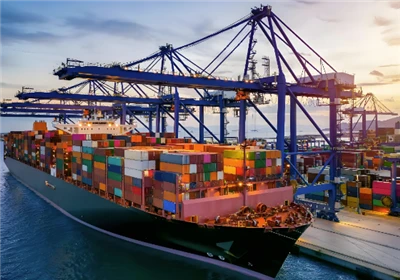
If you’re ready to move forward, whether you have a specific product already or you’re still exploring options, I’m here to help. I know sourcing internationally can feel overwhelming, especially with all the terms and fees, and my goal is to make the DDP process clear, no surprises.
Nigeria Dedicated Line References:
- Incoterms 2020 Publication, International Chamber of Commerce
- Harmonized System (HS) Code Guidelines, World Customs Organization
- Duty and Tax Calculation for International Shipments, U.S. International Trade Administration
- DDP Shipment Compliance Best Practices, Global Trade Magazine
Pengcheng Yunqi (Shenzhen) Supply Chain Co., Ltd.
Pengcheng Yunqi (Shenzhen) Supply Chain Co., Ltd. is one of the most experienced double clearance and tax included ddp suppliers and supporting logistics services providers in China. We are committed to offering comprehensive, one-stop, door-to-door cross-border solutions for every clients. For price consultation, contact us.
Address: Room 735, Maker Building, No. 72-6 Huanguan South Road, Xintian Community, Guanhu Subdistrict, Longhua District, Shenzhen
E-mail: cy@pcyqfwd.com
WebSite: https://www.pcyqfwd.com/
