If you’re reading this, chances are you’ve got a soft spot for heavy-duty rides—think work trucks, medium-duty vans, even the occasional off-road utility vehicle that demands to carry a load. And if you’ve dug into suspension options, you’ve probably heard of torsion bars. For decades, they’ve been the go-to for a lot of fleets and manufacturers, and honestly, we’ve sold our share of them as a suspension supplier. But here’s the thing: we also see firsthand the headaches they cause our customers, and it’s time we talk about the problems that don’t make it into the sales brochures. No BS, just real-world stuff that matters if you’re running a fleet or spec’ing a new ride. Vehicle Suspension System

First off, let’s keep it basic for anyone who doesn’t geek out on suspension tech 24/7. A torsion bar is essentially a long, steel spring that twists instead of compressing. One end bolts to the vehicle’s frame, the other to the control arm; when the wheel hits a bump, the bar twists, absorbing the shock and keeping the ride stable. Makes total sense for heavy loads, right? They’re simpler than leaf springs in some ways, lighter too, which is a win for fuel efficiency. But where they cut corners in simplicity, they create problems that turn into service calls, downtime, and extra costs for guys who can’t afford either.
The big one we see every week is adjustability gone wrong. Wait, adjustability sounds like a good thing, right? You can tweak the ride height by turning a bolt on the torsion bar to wind it tighter or looser. But here’s the catch: that adjustment is only as good as the tech doing it. A lot of fleets cut corners on maintenance, or hire guys who don’t know how to set the preload correctly. If you wind it too tight, you stiffen the suspension so much that every pothole or speed bump turns into a jarring ride for the driver—think bone-rattling, which leads to fatigue on long hauls and even workplace comp claims. Wind it too loose, and you get sag. A truck that’s supposed to carry 10,000 pounds might sag 2 or 3 inches under half that load, which messes up alignment, wears out tires way faster, and makes the vehicle handle like a boat in a crosswind. We had a delivery company client last year who thought their torsion bars were shot, but turns out the mechanic just didn’t torque the adjuster correctly after a tire change. They wasted $2k on new bars before we even looked at it. That’s the kind of avoidable mistake torsion bars enable because their adjustability is not set-it-and-forget-it.
Then there’s the whole load sensitivity issue. Torsion bars are linear springs, meaning their stiffness stays the same no matter how much load you put on them. Leaf springs, by contrast, get stiffer as you add weight, which makes sense—you need a firmer ride when you’re carrying a heavy load to keep the chassis level. Torsion bars? Not so much. If you’re running empty, they’re way too bouncy; load them up, and they might bottom out before the bars reach their maximum twist capacity. For example, a work truck spec’d with torsion bars might handle great empty, but once you pile on 8,000 pounds of tools and materials, the rear end drops, the axle angles change, and you risk damaging CV joints, wheel bearings, even the frame. We had an HVAC company come to us a while back whose service vans were throwing CV left and right. Turned out their torsion bars were being spec’d for light-duty use, not the 6,000 pounds of equipment they were hauling daily. No amount of adjusting would fix that because linear springs just can’t adapt to variable loads the way other systems can. That’s a design flaw that doesn’t show up on paper until you’re stuck replacing parts every month.
Wear and tear is another headache, and it’s easy to miss until it’s too late. Torsion bars are made of high-tensile steel, but that means they’re prone to fatigue over time, especially if you’re constantly loading and unloading heavy cargo or bouncing off-road. The twist motion creates stress at the ends where they connect to the frame and control arms—those are stress risers, basically weak points. Over thousands of twists, small cracks start to form, and before you know it, the bar snaps. And here’s the worst part: a broken torsion bar doesn’t just disable one wheel. Since each bar is connected to one side, but the twisting of the bar affects alignment across the axle, a snap can throw the entire axle out of whack, leading to uneven tire wear, steering pull, and even loss of control at high speeds. We had a construction client last winter whose torsion bar snapped on the highway, causing their dump truck to swerve into the next lane. No one got hurt, but the repair bill was $5k, plus downtime of 3 days. That’s a lot of money for a part that’s supposed to last 100k miles. And it’s not just the bars themselves—the adjuster bolts and the splines where they connect to the control arms wear out too. Strip a spline, and you can’t adjust the ride height at all, leaving you stuck with a truck that’s either sagging or too stiff.
Ride quality is a topic we hear a lot about from drivers, and it’s a consistent complaint with torsion bars. Compare them to coil-overs or air suspension, and torsion bars just can’t match the smoothness, especially on uneven roads. Because they’re linear, they don’t absorb small bumps the way progressive springs do. A pothole that would barely be felt in an air-suspended van feels like a punch in the gut in a torsion bar setup. And for drivers who are in their vehicle 10+ hours a day, that’s a big deal for retention. We work with a delivery fleet that used torsion bars for their entire van line, but after a survey, 60% of their drivers said they were looking for new jobs because of the ride. They switched part of their fleet to air-assisted suspension, and driver turnover dropped 25% in 6 months. That’s a hidden cost torsion bars impose—driver satisfaction, which translates directly to how long your best workers stay on the job.
Maintenance access is another small but annoying problem. Torsion bars are tucked up inside the frame, usually behind the front wheels, so getting to them for adjustments or repairs means lifting the entire front end, removing the wheels, and sometimes even taking off the inner fenders. For fleets that do their own maintenance, that’s extra time and labor—half an hour per wheel, every time you need to adjust the ride height. Compare that to air suspension, where you can adjust the ride height with a switch in the cab, no jacks or tools needed. We had a client whose fleet of 50 work trucks spent 4 extra hours a week just adjusting torsion bars after tire rotations. Multiply that by $100 an hour in labor, and that’s $20,800 a year in wasted time—just because the part is hard to get to. And if you have to replace a torsion bar, it’s even worse; you might need a special tool to remove the old one, and if the bar is rusted in place, you’re looking at extra work to get it free.
Let’s not forget about performance off-road, which is a huge one for a lot of our customers who run their vehicles in remote areas or on rough terrain. Torsion bars have a fixed rate, so they don’t flex as much as coil springs when the wheel is pushed up or down. That means when you’re off-roading, you can get wheel lift—one wheel loses contact with the ground—way easier than with other suspension types. Wheel lift equals loss of traction, which is a nightmare if you’re stuck in mud or snow. We had a utility company that used torsion bar trucks for line work in rural areas, and they were always getting stuck because one front wheel would lift when they hit a rut. They upgraded to coil-over suspension, and their off-road performance improved so much they cut their recovery calls by 40%. Torsion bars just can’t handle the dynamic movement of off-roading the way progressive springs can.
Now, I know what some of you are thinking: “Torsion bars are cheap, right? That’s why we use them.” Yeah, initial cost is lower, but the total cost of ownership is often higher. Add up the extra maintenance, the part replacements, the driver turnover, the downtime, and it’s not as much of a bargain as it seems at first. We’ve had customers switch from torsion bars to other systems and save 15-20% per year on vehicle operating costs, just by fixing the hidden problems.
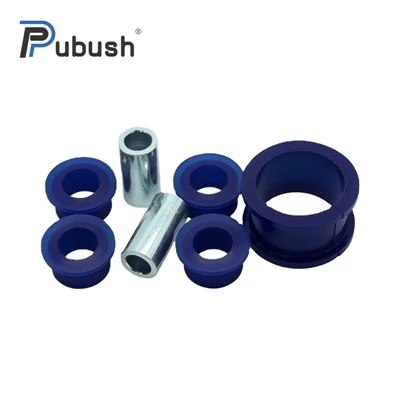
At the end of the day, torsion bars aren’t all bad. They work great for light-duty, on-road use where load is consistent and adjustability is done right. But for a lot of fleets and heavy-duty applications, the problems they cause add up to more than the benefits. If you’re dealing with sag, stiff rides, broken parts, or driver complaints, it’s worth taking a hard look at your suspension setup. We’re a vehicle suspension system supplier, and we don’t push one solution over another—we just give you the real stuff, no sales fluff. If you’re tired of the headaches that come with torsion bars, reach out to our team. We can walk you through different options, compare total cost of ownership, and help you find a setup that works for your specific needs, no fine print, no hidden fees. Let’s cut the crap and find a suspension that keeps your fleet on the road, not in the shop.
Skid Plate References:
- Gillespie, T. D. (1992). Fundamentals of Vehicle Dynamics. Society of Automotive Engineers.
- Jazar, R. N. (2017). Vehicle Dynamics: Theory and Application (2nd ed.). Springer.
- Society of Automotive Engineers (SAE) International. (2020). Torsion Bar Suspension Design and Application Guidelines. SAE International.
- Heavy Duty Trucking. (2021). “Suspension Solutions for Fleets: Balancing Load, Ride, and Cost.” Heavy Duty Trucking Magazine.
Xingtai Refined Machinery and Auto Accessory Co., Ltd.
Xingtai Refined Machinery and Auto Accessory Co., Ltd. is one of the most professional vehicle suspension system manufacturers and suppliers in China, featured by quality products and low price. Please rest assured to wholesale durable vehicle suspension system made in China here from our factory. Customized orders are welcome.
Address: XINGTAI REFINED MACHINERY AND AUTO ACCESSORY CO., LTD507 NORTH TAIHANG ROAD, XINGTAI CITY, HEBEI PROVINCE, PR.
E-mail: lindy@rfauto.biz
WebSite: https://www.pubush-suspension.com/
