If you’ve ever stared up at a commercial jet climbing through thin, frigid air or a military stealth drone zipping over a test range, you might not think twice about the thin, unassuming layers on its metal parts. But as a surface finishing supplier, I’m here to tell you those layers aren’t just pretty—they’re what keep aerospace parts from corroding, handle the insane temperatures of a jet engine, and even help a fighter jet stay hidden from radar. Let’s break down the key aerospace sub-industries and how surface finishing makes each of them work. Surface Finishing
First, let’s talk about commercial aircraft. This is the biggest sub-industry right now, especially with airlines expanding fleets and replacing old planes post-pandemic. The big issues here are corrosion, weight, and durability. Planes fly at 30,000 to 40,000 feet, where humidity is near zero and temperatures drop to -55°F, but they also sit on the tarmac in rain, snow, and salt (especially in places like Miami or Singapore, where coastal air is super corrosive). Aluminum is the go-to metal for most aircraft airframes because it’s lightweight, but it rusts like crazy when exposed to moisture and salt. That’s where we come in. We do chromate conversion coatings on aluminum parts—thin, invisible layers that act like a barrier between the aluminum and the bad stuff. Wait, but I know people have been talking about hexavalent chromates being toxic, so these days we also use trivalent alternatives that work just as well without the health risks. We also do anodizing, which is thicker than chromate coatings and gives aluminum a tougher surface. For parts like wing skins or fuselage panels, a hard anodized finish adds wear resistance so the panels don’t get scratched by debris on takeoff or taxiing. Oh, and for the tiny fasteners that hold the fuselage together? We coat those with a dry film lubricant so they don’t seize up when they expand and contract from temperature changes. That’s a huge pain point—nothing shuts down a plane faster than a stuck bolt.
Next up, general aviation and business jets. This sub-industry is smaller, but it’s super specific. Business jet owners want their planes to look perfect, so aesthetics matter here too. Think a Gulfstream or a Bombardier with a shiny, mirror-like fuselage. We do chrome plating on aluminum cowlings and wing tips to get that high-gloss finish, but again, we use modern, low-emission chrome processes to meet EPA rules. Also, general aviation planes often fly in more remote areas, so their parts need to be more durable. For engine components like piston rings, we do plasma spray coating with a ceramic material that cuts friction and makes the engine last longer between overhauls. A lot of small plane owners can’t afford to rebuild engines every few years, so that’s a big sell. We also do passivation on stainless steel parts here—removing free iron from the surface so the steel doesn’t rust. That’s important for things like fuel lines and control cables, which are exposed to fuel and oil all the time.
Then there’s military and defense aerospace, which is where surface finishing gets really wild. Stealth technology is a game-changer here. I don’t care how good an F-35’s design is—if its surfaces aren’t treated with radar-absorbent materials (RAM), it’ll show up on enemy radar like a neon sign. We apply thin polymer-based RAM coatings that absorb radar waves instead of bouncing them back. These coatings have to be super precise—even a tiny scratch or uneven spot can throw off the stealth profile, so we use automated spray systems that lay down the coating to within thousandths of an inch. Also, military jets pull way more Gs than commercial ones, and their engines run much hotter. The exhaust nozzles on fighter jets get up to 1,800°F, which would melt regular aluminum. We do thermal barrier coatings (TBCs) on those nozzles—ceramic layers that insulate the metal from the heat, keeping the nozzle intact. We also do corrosion-resistant coatings on parts that deploy into saltwater, like naval aircraft that land on carriers. Salt spray is way harsher than coastal air, so we use multi-layer coatings that combine chromate conversion, primer, and topcoat to create a defense in depth.
Wait, don’t forget space aerospace—this is the fastest growing sub-industry right now, what with SpaceX, Blue Origin, and all the satellite companies. Satellites have to survive the vacuum of space, extreme temperature swings (from -250°F in Earth’s shadow to 2,500°F in direct sunlight), and micro-meteoroid impacts. For satellite structural parts, we do electroplating with gold—wait, gold might seem fancy, but it’s actually super practical. Gold is an excellent conductor, so it prevents static electricity buildup on the satellite’s surface, which could fry its electronics. It’s also corrosion-proof, so it doesn’t degrade in space. For rocket engine components, we use vapor deposition coatings that are super thin but incredibly strong. When a rocket launches, the engine experiences a pressure of millions of pounds, so the parts need to hold together while withstanding temperatures over 3,000°F. We also do space-grade anodizing on satellite panels to protect them from atomic oxygen, which is abundant in low Earth orbit and eats away at regular metal surfaces. Oh, and for reusable rockets (like SpaceX’s Falcon 9), we have to coat the first stages that come back through the atmosphere, which heat up to red hot on re-entry. We do a ceramic thermal coating that insulates the rocket so it doesn’t burn up, and then it can be refueled and flown again—saving the company millions per launch.
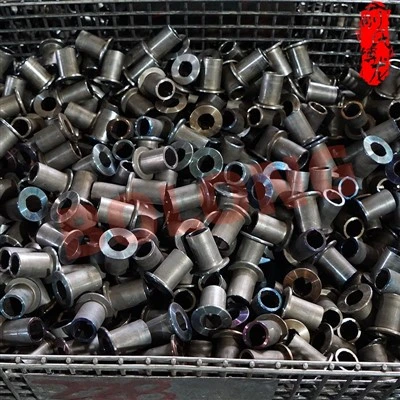
Now, let’s talk about the parts we coat across all these sub-industries, because that’s what matters most. It’s not just big things like wing skins—it’s the tiny stuff too: fasteners, bolts, rivets, springs, valves, control rods. Those parts are often overlooked, but if one of them fails, the whole plane or satellite is done. For example, a bolt holding a satellite’s solar panel bracket needs to not seize up when the panel expands in sunlight, so we coat it with a solid lubricant like molybdenum disulfide that works in a vacuum. For hydraulic valves in commercial planes, we do hard chrome plating to make the surface smooth and wear-resistant, so the valves open and close reliably thousands of times a flight.
I get it—if you’re a procurement manager at an aerospace company, you’re probably dealing with a lot of suppliers. Surface finishing is a niche, specialized service, and it’s not something you can just outsource to any shop. The tolerances are insane—we’re talking about finishing parts to within a few millionths of an inch, because even a tiny variation can throw off a plane’s aerodynamics or a satellite’s radar signature. Also, aerospace parts have super strict certifications—AS9100, NADCAP, those are non-negotiable. Every coating we apply has to be traceable, every batch has to pass tests for corrosion resistance, wear, and adhesion. As a supplier, we don’t cut corners here—we have our own in-house testing lab where we salt-spray test parts for 1,000+ hours to make sure they don’t rust, and we use X-ray fluorescence to check that the coating thickness is exactly what it’s supposed to be.
Wait, let’s talk about recent trends, because this industry moves fast. A lot of aerospace companies are trying to reduce weight to save fuel, so we’re working on thinner coatings that still provide the same protection. For example, a 10-micron coating instead of 20-microns—cuts down on weight by half, which for a whole plane is like saving a passenger’s worth of fuel every flight. Also, sustainability is huge now. The old chromate processes were toxic, so we’ve invested millions in new technologies that use 90% less water and generate almost no hazardous waste. We’re also using recycled metals for some coatings, so we’re part of the aerospace industry’s push to be more eco-friendly.
Let me share a quick story to make this real. A few years back, we had a client who made business jet wing tips. They were having a problem with their anodized coatings peeling off after a year of service, especially in cold climates. We did some testing and found out their old coating was too thick, and when the metal expanded and contracted, the coating couldn’t flex, so it cracked. We switched them to a flexible anodizing process that’s just as durable but can move with the metal. They saw a 90% reduction in coating failures, which saved them hundreds of thousands of dollars in rework and downtime. That’s the kind of problem-solving we do, not just spraying a coating and calling it a day.
So whether you’re working on commercial jets, military stealth aircraft, business planes, or satellites, surface finishing isn’t a secondary step—it’s a critical part of making those vehicles safe, reliable, and effective. Every layer we apply is designed to solve a specific problem: corrosion, heat, friction, radar detection, space vacuum. And as the aerospace industry keeps growing, especially with new space companies and electric planes, the demand for better, more specialized surface finishing is only going to go up.
If you’re a procurement manager or engineer looking for a reliable, certified surface finishing supplier that understands aerospace-specific needs, we’re here to help. We work with all the major sub-industries, have all the necessary certifications, and can tailor coatings to your exact part specifications. Whether you need corrosion protection for aluminum airframes, thermal barrier coatings for jet engines, or radar-absorbent materials for military aircraft, we’ve got the expertise and the equipment to get it done right. Reach out to us to chat about your next project—we’ll even send a free sample test to show you how our coatings perform.
Auto Air Suspension Parts References
- AS9100 Rev D: Aerospace Quality Management System Requirements, International Aerospace Quality Group, 2016.
- NADCAP Standards for Surface Finishing, National Aerospace and Defense Contractors Accreditation Program, 2022.
- “Surface Coatings for Aerospace Applications,” Aerospace Materials Handbook, Society of Automotive Engineers, 2021.
- Thermal Barrier Coatings for Gas Turbines, NASA Technical Report TM-2019-219874, 2019.
- Radar-Absorbent Materials for Stealth Aircraft, U.S. Air Force Research Laboratory Report AFRL-RZ-ED-TP-2020-0012, 2020.
Ningbo Fenghua Bolong Machinery Manufacturing Co., Ltd.
Ningbo Fenghua Bolong Machinery Manufacturing Co., Ltd. is one of the most professional surface finishing manufacturers and suppliers in China, also supports high quality customized service. With abundant experience, we warmly welcome you to buy durable surface finishing made in China here from our factory.
Address: No. 27 Hehai Road, Binhai New Area, Fenghua Economic Development Zone, Ningbo City, Zhejiang Province
E-mail: seven@nbbolongmachinery.com
WebSite: https://www.nbbolongmachinery.com/
