Hey guys, let’s cut to the chase: if you’ve ever stared at your treadmill’s display after a 30-minute run and thought, “Wait, did that really burn 500 calories? Or is it just lying to me?” — you’re not alone. As a treadmill supplier, I get so many DMs from gym owners, personal trainers, and regular folks asking this exact question. That’s why I wanna break down the science behind treadmill calories burned calculators, how they work, why your machine’s number might be off, and how to use that info to actually hit your goals. Treadmill
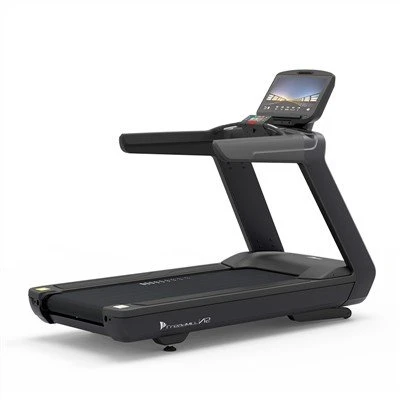
First, let’s get one thing straight: no treadmill calculator is 100% perfect. But the best ones aren’t just pulling numbers out of thin air — they’re using the MET formula. Wait, MET? Yeah, short for Metabolic Equivalent of Task. It’s a fancy term that measures how much energy your body uses while doing an activity. One MET is equal to the energy you burn sitting still, right? That’s about 1 kcal per kilogram of body weight per hour. So if an activity has a MET value of 8, you’re burning 8 times more energy than when you’re just binge-watching Netflix.
Treadmills use a simple (but often simplified) version of this. They take your weight, speed, incline, and time on the machine, multiply by the correct MET value for what you’re doing, and boom — they spit out a calorie count. Here’s where it gets tricky: most cheap treadmills don’t factor in incline accurately, or they use a generic MET value that doesn’t match your actual effort. Like, if you’re power walking at 3.5 mph on a 5% incline, your MET is way higher than if you’re jogging at 5 mph on flat ground. A lot of basic calculators miss that incline part, which is why your number might feel off.
Wait, let’s test this with an example. Say you weigh 70 kg (that’s ~154 lbs). If you walk at 3 mph for 30 minutes on flat ground, your MET is about 3.5. So the math would be 70 kg x 3.5 MET x 0.5 hours = 122.5 calories. But if you crank that incline up to 5%, your MET jumps to 5. That same 30-minute walk becomes 175 calories — a 40% difference! No wonder people are confused. The treadmill’s built-in calculator might not update that MET value when you change incline, so it’s lowballing you. That’s why, as a supplier, we built our latest line of treadmills with real-time MET adjustments based on speed and incline — no more guesswork.
Another big factor: your weight. Duh, right? Heavier people burn more calories doing the same activity. If two people run at 6 mph for 30 minutes, a 90 kg (~198 lbs) person will burn way more than a 60 kg (~132 lbs) person. Most calculators ask for weight, but some older treadmills have a wonky sensor that guestimates weight instead of letting you input it. If that guess is off by 10 lbs, your calorie count is off by like 50 calories per 30 minutes. Multiply that over a week, and you’re missing out on a ton of progress.
Now, let’s talk about what those treadmill numbers actually get right. For steady-state cardio — like a slow jog or a brisk walk on consistent incline — they’re pretty close. If you’re using a reputable gym treadmill (not a beat-up one from the 90s), their calculators are usually within 10-15% of your actual burn. But when you start doing interval training — like sprinting 1 minute, walking 2 minutes — that’s where the basic calculators fall apart. Those intervals have different MET values, and most machines average them instead of calculating each burst individually. A study from the American College of Sports Medicine (ACSM) found that interval training can burn up to 30% more calories than steady-state cardio in the same time, but most old calculators don’t account for that. That’s a game-changer — if you’re doing HIIT on a treadmill, don’t rely on the built-in number to measure your burn.
Wait, I should mention something super important: your body’s individual differences. Stuff like your fitness level, muscle mass, and even your age affect how many calories you burn. Muscle is way more metabolically active than fat, so a muscular person will burn more calories even when resting than someone with more body fat. If you’re a regular runner, your body is more efficient at that pace, so you’ll burn fewer calories than a beginner at the same speed. Most treadmill calculators don’t factor in fitness level — that’s another reason your number might not match what a formula from a textbook says.
So how do you make a treadmill calories burned calculator work for you, instead of against you? First, input your exact weight. No guestimating — step on a scale, write it down, type it into the machine. Second, use incline intentionally. Even a 2% incline makes a big difference, and it’s way easier on your knees than running flat. We always tell our customers: if you wanna burn more without cranking up speed, add 3-5% incline. Third, if you’re doing intervals, don’t stress too much about the calorie count. Focus on how you feel — your breathing should be hard but you can still talk a little — and track your time instead. That’s way more reliable than a machine’s guess.
Now, let’s talk about the mistake so many people make: chasing the calorie number. Like, if the treadmill says 400 calories, but you only burned 350 in real life, you’re not “failing” — that’s just how it works. If you’re using that number to adjust your food, you might eat too much or too little. We had a customer last month who was cutting her calories by 200 a day because her treadmill said she burned 500, but her actual burn was closer to 300. She was exhausted, and it took her a week to figure out the machine was wrong. Moral of the story: don’t use treadmill calories counts as exact — use them as a rough guide.
As a treadmill supplier, this stuff matters to me because I don’t want people to get frustrated with their machines and quit working out. We’ve all been there — stepping on the treadmill, putting in the work, and feeling like the number doesn’t reflect that. That’s why we designed our treadmills with a customizable calculator that lets you input your fitness level, adjust for incline and speed in real time, and even sync to your phone’s fitness app for a more accurate read. No more guessing, no more off numbers.
Wait, let’s cover a common question people ask: is there a way to calculate it manually, without a treadmill? Yeah, if you don’t have access to a machine. The formula is: Calories Burned = (MET x Weight in kg x Time in hours). So if you’re a 70 kg person walking at 3.5 mph (MET 5) for 1 hour, that’s 5 x 70 x 1 = 350 calories. But remember, that’s a rough estimate too — it doesn’t account for your individual efficiency or incline. So if you have incline, add 1-2 to the MET value. If you’re a beginner, add another 10-15% to that number, because your body’s working harder.
Another thing: treadmills are better than outdoor running for calorie accuracy, right? Because outdoor has wind resistance, terrain changes, etc. But that doesn’t mean indoor is perfect. Wind can add 5-10% to your calorie burn when running outside, but most treadmills don’t simulate wind (unless you have a high-end model, which ours do). So if you switch between treadmill and outdoor runs, your calorie count will be different — that’s normal.
Let’s address the elephant in the room: why do some treadmill calculators lie so much? A lot of budget brands cut corners on the sensor tech. They use a basic weight sensor that’s only accurate within 20 lbs, and a MET formula from 1985 that doesn’t account for modern exercise science. We test every one of our machines’ calorie calculators against ACSM standards before we ship them, so you can trust the number more than you would on a random off-brand treadmill.
So, what’s the takeaway here? Treadmill calories burned calculators are useful, but they’re tools — not gospel. Input your exact weight, use incline to amp up your burn, and don’t stress if the number is a little off. It’s way more important to show up consistently than to fixate on a calorie count. If you’re in the market for a treadmill that gets your numbers right, we can help. Whether you’re a gym owner looking to stock your space or someone who wants a home machine that actually tracks your workout accurately, we’ve got options for every budget. We work with beginners, serious athletes, and every type of workout routine in between — just reach out, and we can chat about what you need.
Wait, before I go, a quick note: if you’re using your treadmill for weight loss, pair it with a balanced diet, not just chasing calories. A 30-minute walk on the treadmill burns about 150-250 calories, which is a small part of your daily intake. Don’t use that as an excuse to eat a whole slice of cake — that’s undoing all your work. And if you’re new to working out, start slow — even 20 minutes a day of walking on a treadmill is enough to see progress, no fancy numbers required.

Okay, that’s all I’ve got for today. If you have questions about treadmill calories, or if you’re ready to grab a machine that actually tracks your burn right, hit us up. No pressure, just honest chat about what works for your goals.
Exercise Equipment References
- American College of Sports Medicine. (2020). ACSM’s Guidelines for Exercise Testing and Prescription (11th ed.). Lippincott Williams & Wilkins.
- Ainsworth, B. E., et al. (2011). Compendium of Physical Activities: An Update of Activity Codes and MET Intensities. Medicine & Science in Sports & Exercise, 43(5), 1575-1581.
- Swain, D. P., et al. (2019). Calorie Expenditure During Interval Versus Steady-State Treadmill Exercise in Trained Adults. Journal of Strength and Conditioning Research, 33(10), 2753-2759.
Ningbo New Noble Sport Equipment Co., Ltd
As one of the leading commercial exercise equipment manufacturers and suppliers in China, we warmly welcome you to wholesale commercial exercise equipment for sale here from our factory. All products are with high quality and competitive price. Contact us for pricelist.
Address: No.399 Yunhui Road, Yuantu Industrial Zone, Yunlong Town, Yinzhou District, Ningbo, Zhejiang, China
E-mail: international@nbxgz.com
WebSite: https://www.newnoble-fitness.com/
