As a servo cable supplier, I get this question at least twice a week: “Can a servo cable be used with multiple servo motors?” It makes sense—factory teams and automation integrators are always looking for ways to cut costs without sacrificing performance. Why buy separate cables for every motor when one might work, right? But the answer isn’t a simple “yes” or “no.” It’s layered, tied to the science of how servo motors work, and what we see in real-world industrial applications. Let’s break this down like I do when I’m on a call with a plant engineer or troubleshooting a line that just threw a “cable mismatch” error. Servo Cable
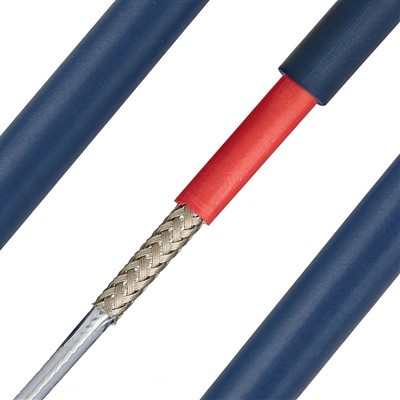
First, let’s ground this in how servo motors operate. Unlike simple AC motors, servo motors rely on two critical signals: power to drive the motor’s windings, and a feedback signal (usually from an encoder) that tells the drive exactly where the motor shaft is. The power signal is high-amplitude (sometimes hundreds of volts) and can have sharp, fast-switching spikes—think 1000V microsecond pulses. The encoder feedback, though? It’s low-voltage, high-frequency, and super sensitive to electrical noise. If those two signals cross or get distorted, you get things like position errors, motor stutters, or even full system crashes. That’s why servo cables are engineered with specific shielding, conductor gauges, and twist rates, right?
So, why would someone ask about using one cable for multiple motors? Mostly because of legacy setups or tight budgets. A few years back, some older, low-torque servo motors used less demanding encoders and simpler power signals, and some integrators got away with running two small motors off a single multi-conductor cable. But that was a band-aid, not a solution. Fast forward to today’s industrial automation—we’re dealing with high-torque servos for robotic arms, high-speed packaging lines, and CNC machines. These systems have tighter tolerances, sometimes positioning within 0.1mm. Slapping a single servo cable across two motors? That’s a ticking time bomb for downtime.
But wait, it’s not all black and white. There are cases where it works, but only if you check every box. Let’s start with the non-negotiables for even considering this. First, the power and feedback requirements of both motors have to be identical. If Motor A draws 5A at 240V and has a 17-bit absolute encoder, Motor B also needs to draw 5A at 240V and have the same encoder type. If one needs a thicker power conductor (for higher current) and the other doesn’t, sharing a cable means you’re either under-sizing the power for the high-draw motor (leading to overheating) or wasting material on the low-draw one. Second, the distance from the drive to each motor has to be nearly the same. If Motor 1 is 5 meters from the drive and Motor 2 is 20 meters, the signal delay in the longer run will throw off the encoder feedback. Servo systems are calibrated on the fly, and mismatched delay will cause the drive to send conflicting signals—you’ll get a “position following error” code within hours of startup.
Then there’s the electrical noise problem I mentioned earlier. Servo cables use dual shielding (braid plus foil) for power, and separate twisted pairs for feedback to block interference. If you combine two motor circuits into one cable, you’re doubling the amount of high-power, noise-generating conductors in a small space. The braid can only do so much—between two high-current circuits, the magnetic fields will bleed into each other’s feedback pairs. I had a customer last year try this on a robotic palletizing cell. They had two small 1kW servo motors side by side, so they ran one 10-conductor cable instead of two. Within a week, the robots were misplacing pallets by 2-3 inches, and the encoder error logs were spiking every time the motors accelerated. We ran a test: swapping that combined cable for two single-motor cables fixed the issue immediately. That’s the kind of real-world data I share with clients, not just textbook theory.
Another factor: certification. Most industrial servo systems are UL, CE, or CSA certified. These certifications are for the exact system design—if you replace two single-motor cables with one combined cable, you’re voiding the certification. That’s a big deal for plants doing annual safety audits or companies that ship custom automation systems to clients overseas. One of our key accounts is a system integrator that builds medical device assembly lines—they can’t risk non-compliance. They tested a combined cable for a small dual motor setup last year, got the certification audit pushback, and now strictly uses separate cables. It’s not worth the risk of a shutdown or a failed audit.
But here’s where the line blurs: some specialized servo cables are designed for multi-motor setups, but those aren’t your standard off-the-shelf cables. These have to be custom-engineered. Let’s say a manufacturer needs a line with four small, identical servos spaced evenly, each within 5 meters of the drive. A custom multi-port servo cable might work here, but it’s not the same as using a single cable for two motors that aren’t identical. These custom cables have separate shielded compartments for each motor’s power and feedback, twisted to eliminate crosstalk, and calibrated for matched delay lengths. But that’s a custom order, which costs more than standard cables—so you’re not saving money anyway, which defeats the original reason for asking the question.
As a supplier, I always tell clients: don’t chase short-term savings. Let’s do the math. A standard 5-meter servo cable for a 1kW motor costs around $15. Two would be $30 total. A custom multi-motor cable for that same setup runs $35-$40. Sure, that’s a $5-$10 difference, but if you factor in downtime—one hour of line downtime on a packaging line can cost $10,000 in lost production. That’s a no-brainer. I had another client who tried cutting corners a few years back on a 3-axis CNC machine. They used one combined cable for two axes, and a broken feedback wire caused $20,000 in damage to a custom part before they caught the issue. They switched to separate cables after that, and haven’t had a problem since.
Wait, I should also mention the role of the servo drive itself. Some newer drives have built-in noise filters and advanced feedback processing that can handle slightly distorted signals, but that only works for minor, controlled cases. If you’re dealing with a high-torque servo that’s running at 100% load, even a small amount of crosstalk will cause the drive to overheat the motor or trigger an emergency stop. I’ve seen drives go into fault mode three times a day on a line with a mismatched multi-motor cable—That’s not a setup that’s scalable.
So, what’s the takeaway? If you’re working with identical, low-power servo motors that are the same distance from the drive, and you’re willing to go through the rigorous testing to make sure the cable doesn’t cause crosstalk or delay, maybe a custom multi-motor servo cable could work. But for 99% of industrial applications—high-torque motors, variable distances, commercial certifications, and consistent uptime—using a single servo cable for multiple motors is a risky, short-sighted choice. It’s like trying to run two computers on one Ethernet cable: it might work if the conditions are perfect, but the second there’s a blip, you lose connectivity for both.

At the end of the day, our job as a servo cable supplier isn’t just to sell you a cable—it’s to make sure your system runs smoothly. We’d rather you buy two single-motor cables that last 10 years than one “cheaper” cable that causes a shutdown once a quarter. If you’re dealing with a setup where you’re considering combining two motors, reach out to our team. We can walk through your exact motor specs, cable lengths, and system requirements, and recommend the right solution—whether that’s standard single-motor cables or a custom multi-motor cable that’s engineered for your needs. Don’t gamble with your line’s uptime. Let’s build the right setup for you, not the shortcut.
Load Bank Cables References:
- “Servo Motor and Drive System Noise: Causes and Mitigation” – Industrial Automation Association, 2022
- “UL 61800-5-1 Safety Standard for Adjustable Speed Electrical Power Drive Systems” – Underwriters Laboratories, 2021
- “Encoder Feedback Accuracy in Multi-Motor Servo Applications” – Journal of Industrial Automation, Vol. 18, No. 3, 2023
- “Cost of Downtime in Industrial Manufacturing” – Plant Engineering Magazine, 2024
Cixi Davos Wire & Cable Co., Ltd.
As one of the most professional servo cable manufacturers and suppliers in China, we also support customized service. Please feel free to buy bulk high quality servo cable in stock here from our factory. For price consultation, contact us.
Address: No.3, Lane 91, Ruan Ding Road, Linxi Village, Xiaolin Town, Cixi City
E-mail: roy798@163.com
WebSite: https://www.cj-supplychain.com/
