As a supplier of automotive connectors, I’ve spent countless hours on the workshop floor and in the lab answering one question more than any other lately: “What chemical resistance do your connectors need to stand up to, and why does it matter so much for our vehicles?” It’s a fair question—most automotive engineers focus on power delivery, signal integrity, and crash performance, but chemicals are the quiet, constant threat that can turn a seemingly minor connector issue into a breakdown on the highway. Over the past 12 years in this industry, I’ve seen connectors fail because of misjudged chemical exposure, and I’ve also seen how getting chemical resistance right can make a connector the unsung hero of a vehicle’s longevity. Let’s break this down, not just with textbook specs, but with the real-world context that matters when you’re sourcing parts you can’t afford to replace prematurely. Automotive Connector
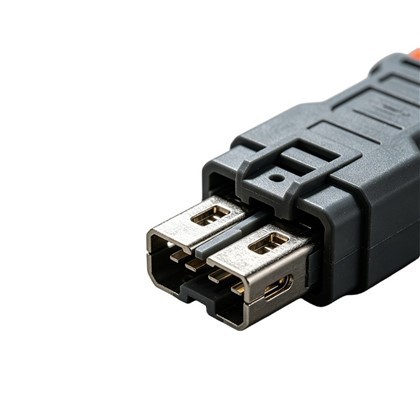
First, let’s ground this in what automotive connectors actually face. When I was training as a design engineer early in my career, I thought chemical resistance was just about withstanding a splash of gasoline or a wash with soap. But modern vehicles are exposed to a far wider range of chemicals, from the factory floor all the way to the end of their 15+ year life cycle. Let’s start with exposure categories: there are under-hood chemicals, cabin interior chemicals, and even environmental chemicals like road salt and UV-stabilized chemicals in plastics that break down over time. Each category has its own demands, and a connector that works in the door panel will fail in the engine bay if you don’t adjust for that.
Under-hood connectors are the toughest job, no question. I’ve worked with connectors for turbochargers, battery management systems, and fuel injectors—all living in a space where temperatures can swing from -40°F to 250°F, and chemicals that break down plastics and corrode metal are a daily reality. The biggest culprit here is engine oil. Not just any engine oil, either: modern synthetic oils have extreme pressure additives, detergents, and dispersants that were designed to clean engine parts, but those same chemicals can act as solvents on the thermoplastics we use for connector housings. I remember a customer a few years back who had a batch of connectors in their engine control module (ECM) failing after just two years. Their connectors were made with a standard nylon 6/6, which we’d used for 10 years without issues—until the manufacturer reformulated their engine oil to add a more powerful detergent. The detergent caused the nylon to swell, loosen the crimp on the pins, and lead to intermittent signal loss. We solved that by switching to a glass-reinforced nylon 6/6 with a modified polymer structure that resists oil absorption, and we now test every new material against the latest API and ACEA oil specs before recommending it. Another under-hood chemical is gasoline and diesel, including ethanol blends up to E85. Ethanol is especially harsh because it’s hydrophilic—it absorbs water, which can seep into connector housings and cause corrosion, and it also attacks certain elastomer seals we use to keep moisture out. For flex-fuel vehicles, we use fluoroelastomer seals instead of standard nitrile, because nitrile swells and loses its elasticity when exposed to E85 over time. That small seal change made a huge difference for a client in Brazil, where E85 is the standard fuel for most passenger cars; they cut their connector warranty claims by 70% after switching to our fluoroelastomer-sealed parts.
Moving inside the cabin, the chemicals are different, but no less demanding. Cabin connectors are for infotainment systems, climate controls, and door locks, and they’re exposed to things people touch and spill all the time: windshield washer fluid, sunscreen, air fresheners, and even cleaning products. I’ve seen connectors in a luxury SUV’s infotainment system fail because a passenger spilled a bottle of sunscreen on the center console. The sunscreen has oils and mineral oils that seep into the connector housing, soften the plastic, and cause the pins to shift slightly—enough to break the HDMI signal between the head unit and the display. For interior connectors, we use a higher-grade polycarbonate/acrylonitrile butadiene styrene (PC/ABS) blend that resists those oils, and we also add a UV stabilizer because cabin windows let in UV rays that can break down plastic over 10 years. Another big one here is de-icing solutions, especially in cold climates. When drivers wash their cars in winter, the de-icer soap and salt-based solutions that get splashed on the doors and dash can work their way into door panel connectors. We’ve found that standard tin-plated pins can corrode from those salt solutions, so for interior connectors in regions with heavy winter road use, we recommend nickel-gold plating instead. The nickel acts as a barrier between the tin and the salt, and the gold ensures good signal conductivity even if a tiny bit of corrosion gets past.
Then there are environmental chemicals that affect every connector, no matter where it is on the vehicle: road salt, humidity, and industrial pollutants. Road salt is a huge issue for vehicles in the northern U.S., Canada, and Northern Europe. That salt dissolves in water and forms a conductive brine that seeps into even the smallest gaps in a connector housing, corroding the contact pins and causing electrical resistance to spike. A few years ago, we did a test where we exposed two sets of connectors—one with standard tin plating, one with nickel-gold—to a salt spray chamber for 500 hours (the equivalent of 10 years of driving in a high-salt environment). The tin-plated connectors had 12x more electrical resistance after the test, while the nickel-gold ones showed almost no change. That’s the kind of data we share with customers when they’re choosing connectors for cold climate models. Humidity is another silent chemical—high humidity can cause moisture to condense on connector pins, and if there’s any road grime or salt present, it forms an electrolyte that speeds up corrosion. That’s why all our connectors for vehicles with high humidity exposure (like models sold in Southeast Asia) have integrated sealing gaskets made from ethylene propylene diene monomer (EPDM) rubber, which is far more resistant to moisture and fungal growth than standard rubber.
Now, it’s not just withstanding existing chemicals—automotive manufacturers are constantly developing new materials, and that means new chemical challenges. A big trend right now is electric vehicles (EVs), which have different connectors than gas-powered cars. High-voltage EV connectors face battery coolant, which is a glycol-based fluid with additives that protect the battery from overheating, but those additives are aggressive. I’ve worked with EV battery connectors where the coolant had silicone-based additives that ate through standard nylon housings in less than a year. We now use a specialized polyphenylene sulfide (PPS) resin for high-voltage connectors, which has a higher melting point and is impervious to battery coolant, engine oil, and many other industrial chemicals. Another EV-specific challenge is hydrogen fuel cell vehicles, which are being tested for commercial use. Hydrogen is a very small molecule, so connectors for fuel cells need to resist hydrogen permeation as well as chemicals like hydrogen peroxide, which is used to generate power in some fuel cell systems. For those, we use cross-linked polyethylene housings, which have a tight molecular structure that keeps hydrogen from seeping through and damaging the connector internals.
A common mistake I see engineers make is testing chemical resistance only at room temperature. Chemicals behave very differently at high temperatures—engine bay connectors can be 150°F or higher, and that’s when solvents become far more active. We always test our materials at the operating temperature range of the connector, not just 70°F. For example, when we test nylon against engine oil, we do it at 212°F, because that’s the temperature inside an ECM housing when the engine is running. At that temperature, the oil is more fluid and penetrates the nylon faster, so a material that seems fine at room temperature can fail in actual use. We also test for long-term exposure, not just short-term splashes. A connector that gets a splash of oil once during a wash is fine, but one that’s exposed to oil vapor for 15 years will absorb it slowly, changing the shape of the housing and loosening pins. That’s why our testing lasts 1000 hours of continuous exposure, which mimics the cumulative effect of a decade of real-world driving.
It’s also important to note that chemical resistance isn’t just about the housing material—the contact plating matters too. Copper and aluminum pins are the base, but the plating is what protects them from corrosion and maintains signal integrity. For low-voltage signal connectors (like those used for sensors), we use tin-lead plating because it’s cost-effective, but for high-voltage power connectors, we use silver plating with a nickel underlayer. Silver is an excellent conductor, and the nickel prevents silver sulfide (which forms when silver reacts with sulfur in the air) from building up and increasing resistance. Sulfur is a big issue in industrial areas, where air pollution has high levels of sulfur dioxide, and it can cause connectors in exposed locations (like the undercarriage) to corrode over time. We also offer electroless nickel plating for connectors that go into areas with high sulfur exposure, because it’s more uniform and provides a better barrier than electroplated nickel.
I’ve talked to enough engineers to know that cost is always a factor, but cutting corners on chemical resistance is a false economy. I once had a customer who chose a cheaper nylon connector for their door panel connectors, thinking it would resist interior chemicals. Within 18 months, they had 10,000 warranty claims from connectors failing after being exposed to sunscreen and cleaning products. The cost of replacing those connectors was 5x more than if they’d chosen our slightly more expensive PC/ABS connectors, and their brand reputation took a hit too. That’s why we don’t just sell parts—we work with customers to match the connector material to their specific application, not just a one-size-fits-all spec. We have a lab on-site where we can test any customer’s target chemicals, whether it’s a new engine oil formulation or a cleaning product they use in the cabin, to make sure our connectors will hold up.
So what does this mean for anyone sourcing automotive connectors? First, don’t just ask “is this connector chemical resistant?”—ask what it’s tested against, and under what conditions. Is it tested at the operating temperature of the space it’s going into? Is it exposed to the chemicals that their specific model of vehicle will actually face (not just generic ones)? For EVs, is it compatible with battery coolant or fuel cell chemicals? For vehicles in cold climates, does it resist salt and de-icer? And don’t forget the long-term— a connector that passes a 100-hour salt spray test might fail a 1000-hour test, which is the real measure of how it will hold up over 10 years on the road.
Industrial Connectors As someone who’s been in this industry for over a decade, I can tell you that the best connectors aren’t the ones with the fanciest materials—they’re the ones that match the chemical resistance to the job, tested under real conditions. If you’re working on a new vehicle model, troubleshooting connector failures, or just want to make sure your parts will stand up to whatever chemicals they’ll face on the road, we can help. Contact us to discuss your specific requirements, and we’ll work with you to find the right connector solution that balances performance, cost, and longevity.
References
- Society of Automotive Engineers (SAE). SAE J1128: Test Method for Environmental Conditions for Electrical Connectors for Vehicles. Warrendale, PA: SAE International, 2020.
- International Organization for Standardization (ISO). ISO 16750-4: Road Vehicles – Environmental Conditions and Testing for Electrical and Electronic Equipment – Part 4: Chemical Loads. Geneva: ISO, 2019.
- Automotive Industries Association (AIA). “Chemical Resistance Guidelines for Automotive Connectors.” AIA Technical Bulletin 2021-03, 2021.
- DuPont Engineering Polymers. “Chemical Resistance of Thermoplastics for Automotive Electrical Components.” Wilmington, DE: DuPont, 2022.
- International Copper Association. “Corrosion Resistance of Copper Alloys for Electrical Connectors in Automotive Applications.” New York: ICA, 2020.
Modelon Precision Industry (Suzhou) Co., Ltd.
With abundant experience, we are one of the most professional automotive connector manufacturers and suppliers in China. Welcome to buy customized automotive connector at competitive price from our factory. If you have any enquiry about pricelist, please feel free to email us.
Address: 1st Floor, Building 22, No. 2628 North Gate Road, Kunshan City, Jiangsu Province, P.R.China
E-mail: jessica_huang2025@163.com
WebSite: https://www.modeloncn.com/
