As a high pressure piston compressor supplier with over a decade of working directly with manufacturers, food processing plants, and industrial workshop managers, I’ve lost count of how many times I’ve heard the same question: “I need a high pressure piston compressor, but how do I pick the right one that won’t leave me stuck with extra cost or something that can’t keep up?” A few years back, a small agricultural equipment repair shop in Ohio bought a cheap off-brand unit because it was $300 less than the model I recommended. By week three, the seals were failing, the pressure output fluctuated so badly their paint booth project got delayed, and they ended up paying twice as much to fix it plus rent a temporary unit for two weeks. That story always sticks with me because it’s not about selling the most expensive compressor—it’s about helping someone make a choice that works for their specific job, not a one-size-fits-all box. Today, I want to walk through the steps I walk every customer through, no sales pitch tricks, just real, practical advice that’s saved clients from headaches and wasted money. High Pressure Piston Compressors

First and foremost, you have to start with the non-negotiable core of what your compressor will actually do: required pressure and flow rate. This isn’t a guess; it’s a calculation that determines everything from the motor size to the number of compressor stages you’ll need. Let’s break this down simply. Pressure is measured in PSI (pounds per square inch) or bar, and high pressure pistons are built to handle anything above 100 PSI, up to as high as 5000 PSI for specialized applications. A lot of new users mix this up: if you’re inflating industrial tires, you only need around 120 PSI, but if you’re powering a hydraulic press or feeding compressed air to a PET bottle blowing line, you’ll need 300 to 400 PSI. For something like waterjet cutting or oil and gas pipeline pressure testing, you might need over 1000 PSI. The big mistake here is choosing a compressor that hits exactly your pressure needs, with a little buffer. Wait—buffer? Yes. No industrial process runs at a perfect constant load 100% of the time. If your process needs 250 PSI, a compressor rated for 250 PSI will run hot and wear out 20-30% faster than one rated for 275 or 300 PSI, because it’s operating at its absolute maximum capacity every single cycle.
Then there’s flow rate, measured in CFM (cubic feet per minute) or m³/h. This is how much air or gas the compressor can move at its rated pressure, and it’s not just based on how big the tank is. The number of tools or processes you’re powering will dictate this. For example, if you’re using two air ratchets and a paint spray gun at the same time, you’ll need a higher CFM than if you’re just inflating tires and running one nail gun. A good rule of thumb here is to add up the CFM rating of every tool you’ll use, then add 20-25% extra. That buffer accounts for small leaks in your air lines, pressure drops as the air moves through pipes, and the times you might use multiple tools at once. I once had a customer in construction who skipped this buffer and bought a compressor rated for the exact CFM of one jackhammer. By week two, their crew was running two jackhammers and had to wait 10 minutes every time the tank filled up—costing them thousands in lost work time. That extra 20% buffer isn’t a waste; it’s insurance for your productivity.
Next up: the type of gas you’ll be compressing. High pressure piston compressors aren’t one-size-fits-all for air, nitrogen, oxygen, or natural gas, and picking the wrong type can be a safety hazard, not just a performance issue. For air, standard lubricated piston compressors work great—they use oil to lubricate the piston and cylinder walls, which reduces wear and keeps the unit running smoothly. But if you’re compressing oxygen, oil is a huge risk; it can ignite under extreme pressure, leading to an explosion. For oxygen, you need oil-free compressors made with materials that won’t react with pure oxygen, like stainless steel or Teflon coatings. Nitrogen for food packaging or laser cutting? You still need oil-free units, because even tiny amounts of oil can contaminate the product or damage laser components. For natural gas or other hydrocarbon gases, you’ll need compressors that are specifically designed for gas service, with leak-tight seals and components resistant to corrosion from the gas. This is where cutting corners gets dangerous: I’ve seen shops try to repurpose an air compressor for oxygen, and even a small leak led to a near-catastrophic fire. Always tell your supplier exactly what gas you’re working with, not just that it’s “high pressure.”
Then, consider duty cycle—how long your compressor will run each day. Duty cycle is usually expressed as a percentage: a 100% duty cycle unit can run non-stop for 24 hours a day, every day, while a 50% duty cycle unit can only run half the time before it needs to shut down to cool off. This is tied directly to how you’ll use your compressor. If you’re a small workshop that uses your compressor for an hour or two a day, inflating tires and running a few tools, a 50% duty cycle unit will work perfectly and cost less. But if you’re in a manufacturing plant that runs two shifts a day, 12 hours each, your compressor needs to be 100% duty cycle. These units have heavier-duty components—larger motors, better cooling systems, sturdier pistons—built to handle continuous use. A 50% duty cycle unit running 12 hours a day will overheat, seize up, and die in months, not years. Last year, a metal stamping plant called me because their off-brand compressor died after 8 months of 10-hour days. They tried to save $1,200 on a lower-duty unit, and ended up losing $15,000 in production downtime plus repair costs. Duty cycle isn’t something to guess at—be honest about how many hours a day your compressor will work, and match it to the unit’s rating.
After that, lubrication type: oil-lubricated vs. oil-free. We already touched on this with gas type, but it’s a key point for many applications. Oil-lubricated compressors are more efficient, have lower upfront costs, and last longer because the oil lubricates moving parts and absorbs heat. They produce air with tiny amounts of oil—usually 2-5 parts per million (PPM)—which is fine for most applications like powering air tools, cleaning parts, or spraying non-food-grade paint. But if you need oil-free air or gas—for food and beverage processing, pharmaceutical manufacturing, semiconductor production, or any application where oil contamination would ruin the product—you need an oil-free compressor. These use specially designed piston rings and cylinder coatings, like PTFE or carbon, that don’t need oil to lubricate. They cost a bit more upfront, have shorter run times between maintenance, and are slightly less efficient, but they’re non-negotiable for applications where purity matters. A customer in craft brewing once tried to use an oil-lubricated compressor for transferring CO2 to their kegs. Even the tiny amount of oil in the air gave their beer an off-flavor, leading to a batch recall and a lot of angry customers. Oil type is a make-or-break choice for these jobs, so don’t overlook it.
Now, let’s talk about features that matter beyond the specs. Not all high pressure piston compressors are built the same, even if they have the same pressure and flow ratings. Look at the construction quality: cast iron cylinders are far more durable than aluminum, especially for heavy-duty use, because they dissipate heat better and resist wear. Steel or stainless steel piston rods are better than cheap alloy rods, which can bend under high pressure. Cooling systems: air-cooled units are fine for small, intermittent use, but for large, continuous-duty compressors, water-cooled units work better because they run cooler, last longer, and have less downtime from overheating. For remote sites with no water access, air-cooled with oversized fans works, but be prepared for slightly higher maintenance.
Then there are control systems. Basic compressors just have an on/off switch, but modern units have automatic start/stop controls that kick in when pressure drops below a set level and shut off when it hits the maximum, which saves energy and reduces wear on the motor. Some even have built-in pressure regulators, digital displays for pressure and run time, and overload protection that shuts the unit down if it overheats or has an electrical issue. These features might cost a little extra, but they pay for themselves in lower energy bills, less repair work, and easier monitoring.
Maintenance requirements are another big factor. No compressor works forever, and how easy it is to service will affect your long-term costs. Look for units with easy access to air filters, oil fills, and valves—you shouldn’t have to take the entire unit apart to replace a filter. For oil-lubricated units, check how often you need to change the oil (usually every 500-1000 hours for heavy use) and what type of oil it uses—specialty compressor oil is more expensive than standard motor oil. Oil-free units have longer intervals between lubrication checks, but their piston rings will need replacement every few years, so make sure parts are easy to find and affordable. I always advise customers to ask their supplier for the recommended maintenance schedule and the cost of routine parts before buying— a cheap compressor with $200 in annual part costs isn’t actually cheaper than a slightly more expensive unit with $50 in annual parts.
Portability vs. stationary use is another consideration. If you’re a contractor who moves between job sites, a portable high pressure piston compressor with wheels and a built-in tank is essential. These are lighter, smaller, and designed to be towed or carried, though they usually have lower duty cycles and pressure ratings than stationary units. Stationary units are built to stay in one place, like a workshop or manufacturing plant, and have higher flow and pressure ratings for heavy, continuous use. They’re also usually quieter, because they’re installed in a dedicated space, but you’ll need to have a permanent power source hooked up to them. A customer who runs a mobile tire service once bought a stationary compressor because it had a higher CFM rating—he couldn’t fit it in his truck, and lost a day of work trying to transport it. Don’t get swayed by specs alone; match the unit to how you’ll move it, or where it’s going to live.
Finally, safety and compliance. High pressure compressors have built-in safety features for a reason: pressure relief valves that open if pressure gets too high, thermal overload protection, and leak detection systems. Always make sure your unit meets local safety standards—like OSHA in the US, CE in the EU, or whatever regulations apply to your area. For specialty applications, like compressing hazardous gases, you’ll need extra safety features like explosion-proof motors and spark-resistant components. Cutting corners here isn’t worth the risk; a compressor that doesn’t meet safety standards can cause severe injury, property damage, or even death.
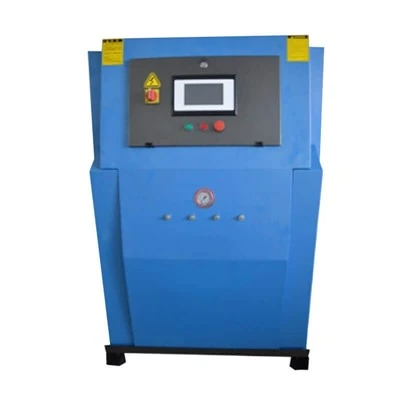
At the end of the day, choosing the right high pressure piston compressor isn’t about picking the biggest, most expensive unit on the market—it’s about matching every detail to your specific application. If you’re not sure about your pressure and flow needs, I can help you calculate them based on your tools or processes. If you need guidance on oil type or duty cycle for your industry, I’ll walk you through that step by step, no pressure, no sales gimmicks. The goal is to get you a compressor that works for you, not against you. If you’re ready to talk through your needs, or have questions about specific models that fit your application, don’t hesitate to reach out. We can discuss your project, share case studies from similar customers, and find a solution that fits your budget and your workflow.
High-Pressure Booster Air Compressor References
- Compressed Air Gas Institute. (2021). Selection Guide for High Pressure Piston Compressors. CAGI Technical Publication.
- Occupational Safety and Health Administration (OSHA). (2022). Safety Standards for Compressed Gas Systems. 29 CFR 1910.
- Hydraulic Pneumatics Association. (2020). Flow and Pressure Calculations for Industrial Compressors. HPA Technical Note 127.
- National Food Processors Association. (2019). Guidelines for Compressed Air in Food and Beverage Operations. NFPA Bulletin 412.
Shanghai Sollant Energy Saving Technology Co., Ltd.
As one of the most professional high pressure piston compressors manufacturers and suppliers in China, we’re featured by quality products and good service. Please rest assured to buy bulk durable high pressure piston compressors from our factory. Welcome to view our website for more information.
Address: No.215, Songri Center, Beihongqiao, Jiading District, Shanghai, China.
E-mail: info3@sollant.com
WebSite: https://www.sollant-gas.com/
